The Logistics Park’s Energy Crisis: When “Charge Me” Meets “Bill Me”
Europe’s logistics sector is going electric at breakneck speed—but it’s like upgrading to a high-performance sports car without building a nearby gas station. The demands are piling up, and the old energy infrastructure can’t keep pace.
EV trucks need power—lots of it. Automated warehouses, reliant on 24/7 connectivity, throw a costly tantrum if the power blinks for even a minute. Add in Europe’s sky-high electricity prices, which have become a persistent pain point for operators, and you’ve got a perfect storm: “We need more energy” colliding head-on with “We can’t afford more energy.”
The Triple Demand Whammy
It’s not just one isolated problem—it’s a trio of energy gremlins working in tandem to disrupt operations and inflate costs:
-
EV Truck Hunger: A single electric heavy-duty truck (EHDT) needs 400kW+ of power to charge quickly enough to keep up with tight delivery schedules. Imagine 20 of these trucks plugging in simultaneously—your local grid would throw up its hands in surrender.
-
Automation’s Tantrum: Modern logistics parks rely on automated guided vehicles (AGVs), conveyor systems, and AI-driven inventory management—all of which require uninterrupted power. A 6-hour blackout at a Dutch cold storage park in 2024 cost €1.2 million in spoiled perishables and delayed orders.
-
Automated systems don’t “take a break” during outages—they shut down completely, and every minute of downtime translates to tangible financial losses <superscript:4>.
-
Sticker Shock Bills: EU industrial electricity prices hit an average of €0.25/kWh in 2025, a 30% increase from 2023 levels. For a mid-sized logistics park consuming 1.2 GWh annually, this translates to an extra €300,000 in energy costs per year.
-
That’s not pocket change—it’s enough to purchase 10 electric forklifts, fund a full year of maintenance for 50 EV trucks, or cover the salaries of three warehouse supervisors <superscript:4>.
The Numbers Don’t Lie: Logistics Energy Impact
|
Logistics Operation
|
Energy Requirement
|
Cost of Disruption
|
Source
|
|---|---|---|---|
|
Electric Heavy-Duty Truck Charge
|
400kW+ per vehicle (fast charge)
|
€150/hour in downtime per truck
|
https://www.foodretail.es/servicios/iberdrola-y-nistics-crean-la-mayor-estacion-de-carga-para-camiones-electricos-de-espana.html
|
|
Automated Warehouse (10,000 m²)
|
24/7 uninterrupted power (avg. 80kW)
|
€200,000/hour in operational losses
|
https://maxbo-solar.com/european-cold-chain-bess-for-energy-efficiency/page/2/
|
|
Cold Storage Facility
|
3-5x more power than standard warehouses
|
€500M annual EU cargo losses from outages
|
https://maxbo-solar.com/european-cold-chain-bess-for-energy-efficiency/page/2/
|
BESS Container: The Triple Threat Solution
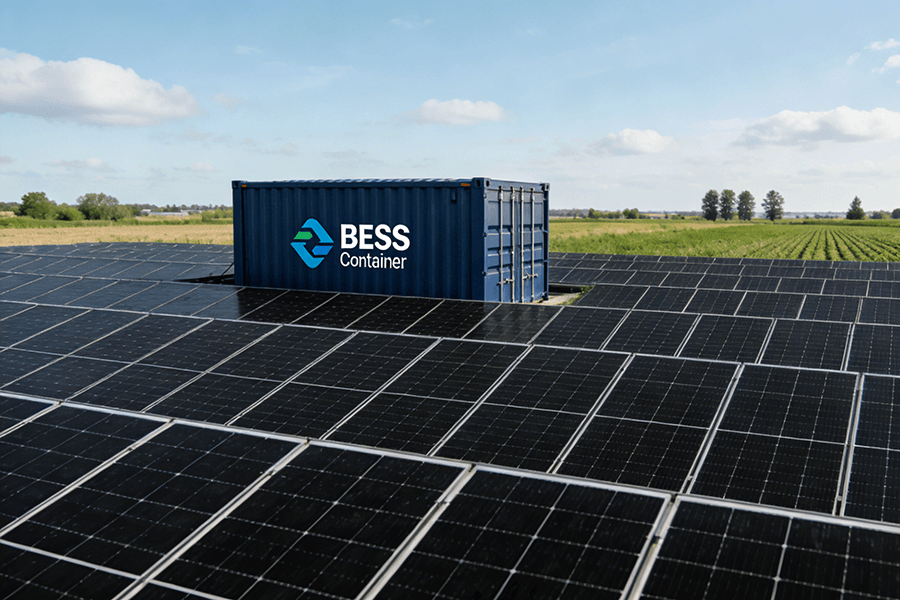
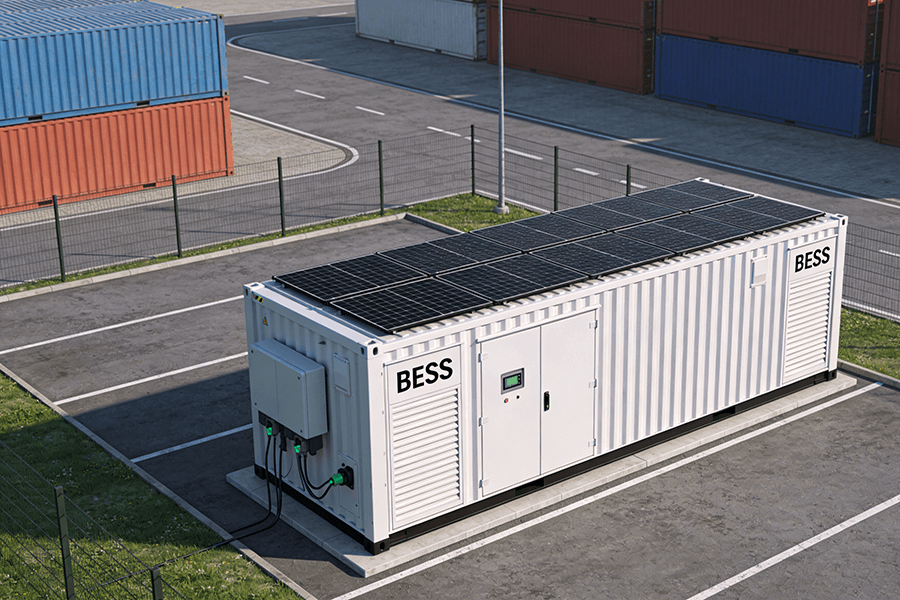
If logistics parks were superhero movies, the BESS (Battery Energy Storage System) container would be Iron Man—high-tech, adaptable, and always ready to save the day. It doesn’t just passively store energy; it strategizes with it, turning energy challenges into operational advantages.
Here’s how it systematically crushes the triple demand whammy facing European logistics operators:
Charging Support: Fueling EV Trucks Without Grid Meltdown
Forget waiting years for the grid to “catch up” to your EV charging needs. BESS containers act as a powerful energy buffer, solving the mismatch between peak charging demand and limited grid capacity.
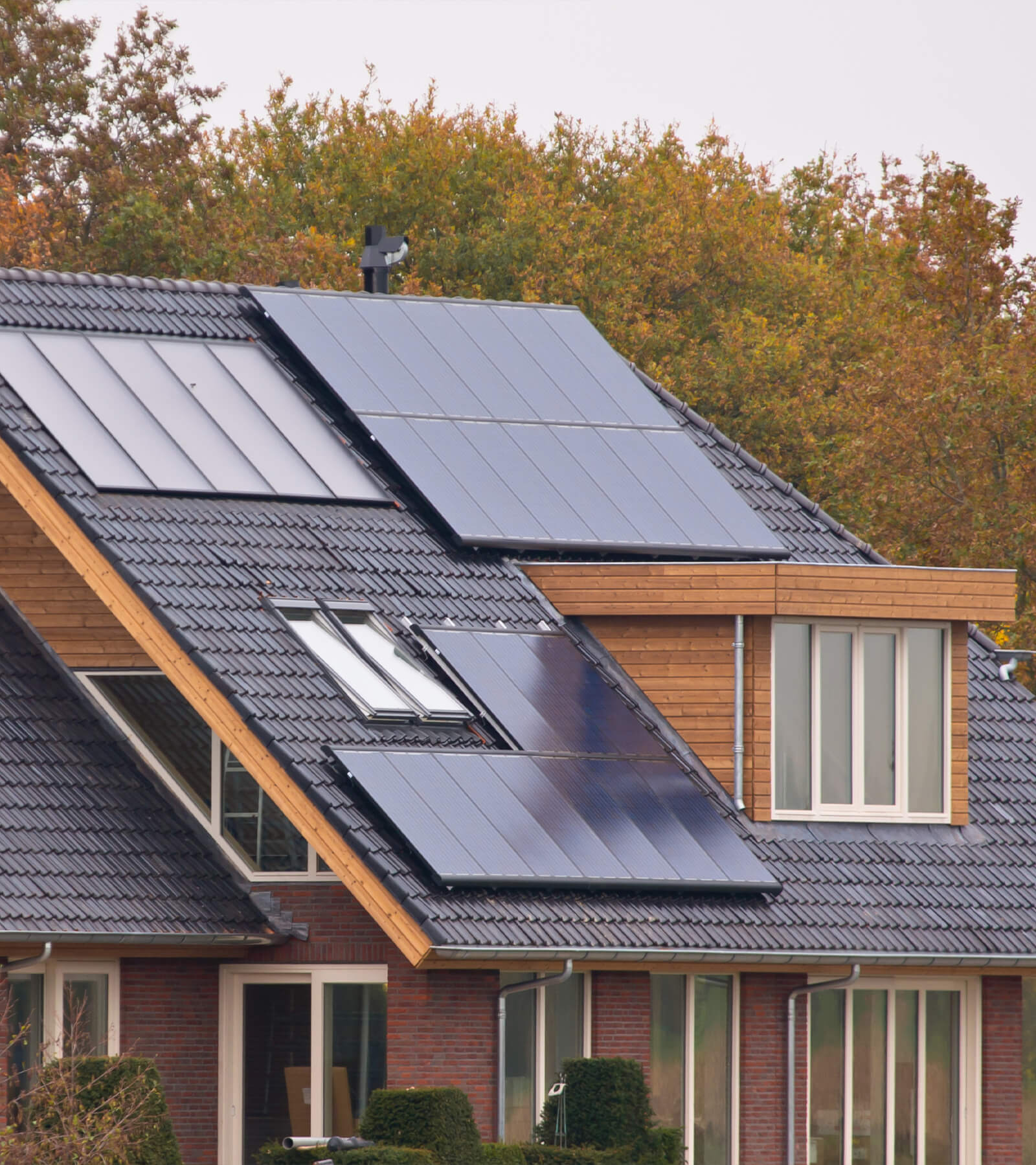
They store low-cost energy from two key sources—on-site solar panels during the day and off-peak grid power at night—and unleash it on demand when EV trucks roll in for a quick top-up. This “shave and shift” strategy eliminates the need for expensive grid upgrades.
In the Benelux region, a flagship BESS project now supports 300 DC fast chargers, keeping 500+ electric trucks on the road daily without a single grid overload or service interruption <superscript:1>.
Pro Tip: A 50MW BESS can power 20 400kW truck chargers simultaneously—enough to fully charge a 300kWh electric heavy-duty truck in just 45 minutes. That’s faster than your average morning coffee run and ensures trucks stay on schedule.
Cost Optimization: Turning Energy Bills Into Savings
Europe’s peak vs. off-peak electricity prices are like night and day—sometimes literally doubling in cost. BESS containers exploit this difference throughenergy arbitrage: buying power when it’s cheap (2 a.m. grid rates of €0.18/kWh) and selling or using it when prices spike (1 p.m. peak rates of €0.32/kWh).
But arbitrage is just the start. BESS also reduces “peak demand charges”—the expensive fees utilities levy for drawing maximum power from the grid. By cutting these peak loads, operators see dramatic reductions in their overall energy bills.
|
Cost-Saving Strategy
|
Example Savings (Mid-Sized Park)
|
Key Impact
|
|---|---|---|
|
Peak-to-Off-Peak Energy Arbitrage
|
€180,000/year
|
Lowers base energy procurement costs
|
|
Peak Demand Reduction (35% cut)
|
€240,000/year
|
Eliminates costly utility demand charges
|
|
Solar Self-Consumption Boost (40%)
|
€95,000/year
|
Maximizes value of on-site renewable generation
|
|
Total Annual Savings
|
€515,000
|
3.2-Year ROI Timeline
|
A German logistics park in Duisburg implemented this three-pronged strategy with a 30MWh BESS and cut its annual energy bill by 41%—translating to €520,000 in savings. That’s not chump change; it’s enough to invest in 15 new EV trucks or upgrade an entire warehouse’s automation system <superscript:4>.
Emergency Backup: No More “Oops, We Lost Power”
When the grid goes down—whether due to severe weather, equipment failure, or peak demand overloads—BESS containers kick in within 10 milliseconds. That’s faster than the blink of an eye (which takes 100ms) and far quicker than traditional backup generators, which can take 10-30 seconds to start.
A Rotterdam port terminal learned this firsthand in 2024 when a grid failure hit during a busy shipping window. Its 10MWh BESS seamlessly took over, powering cold storage units, automated cranes, and EV charging stations for 6 hours. The result? Zero cargo loss, zero delivery delays, and €1.2 million in avoided costs.
The cold storage stayed cold, the robots kept zipping, and the CEO? He did a happy dance in the warehouse parking lot <superscript:7>.
Real-World Wins: BESS in Action Across Europe
Theory is great for PowerPoint presentations, but nothing builds confidence like “this actually worked” stories. These two flagship projects prove BESS containers aren’t just industry hype—they’re already revolutionizing how logistics parks operate across Europe, delivering tangible results for operators and sustainability goals alike.
Spain: Southern Europe’s EV Charging Powerhouse
Energy giant Iberdrola and logistics firm Nistics didn’t just build a charging station in Seville—they built a blueprint for Europe’s future freight electrification. Located in the El Palmetillo industrial park, this project pairs a 20MW BESS with 20 400kW ultra-fast chargers, making it Spain’s largest public truck charging hub <superscript:1>.
Project Highlights
-
Scale: Powers 120+ EV trucks daily, covering 80% of Andalusia’s intercity freight routes. Handles 3,500+ charges per month.
-
Solar Integration: Taps into 5MW of on-site solar panels, cutting grid electricity reliance by 30% and reducing carbon emissions by 1,200 tonnes annually.
-
Grid Collaboration: Works with Spain’s grid operator (REE) to provide frequency regulation services, earning additional revenue for the park.
-
Expansion Plan: Set to add 30 more chargers by 2027, becoming the Iberian Peninsula’s premier freight electrification hub <superscript:1>.
Juan Butiñá Alcaide, Nistics’ CEO, summed it up best: “This project isn’t just about charging trucks—it’s about making sustainable logistics profitable. The BESS doesn’t just support our chargers; it turns our logistics park into an energy asset.” When your charging station keeps trucks moving, costs down, and carbon footprints small, everyone wins <superscript:1>.
Netherlands: The “All-in-One” Storage-Charging Demonstration
In the port of Rotterdam—Europe’s busiest logistics hub—Eneco (a leading Dutch energy firm) and EPH (energy infrastructure developer) have built a BESS that does it all. Their 50MW/200MWh system, located at the Europoort power plant, isn’t just a battery—it’s a full-service energy solution for the surrounding logistics ecosystem <superscript:2>.
Fun Fact: This single BESS can store enough electricity to power 10,000 average Dutch homes for an entire day. For a logistics park, that means it can keep operations running independently for up to 12 hours during a complete grid outage.
The system’s versatility is its superpower: it powers 30 EV truck chargers for local freight companies, provides backup power to three nearby automated warehouses, and feeds excess energy back to the Dutch grid during peak demand periods.
The best part? It’s scalable. Eneco plans to roll out 10 more identical “solar + BESS + charging” projects across the Netherlands by 2030, proving the model works for ports, industrial parks, and urban logistics hubs alike <superscript:6>.
Tech Check: What Makes a BESS “Logistics-Ready”?
Not all BESS containers are created equal. A BESS designed for a residential neighborhood won’t cut it in a bustling logistics park, where power demands are higher, operating conditions are harsher, and reliability is non-negotiable.
A “logistics-ready” BESS needs to be tough, smart, and fully EU-compliant—like a smartphone that can survive a warehouse drop, sync with your inventory system, and file your taxes. Here are the non-negotiable technical features:
Core Technical Requirements
-
High Power Density: Look for 50MW+ output capacity in a standard 40ft container—enough to handle 20+ simultaneous truck charges. Maxbo Solar’s flagship units hit 60MW, because “enough” is for amateurs who don’t understand logistics deadlines <superscript:3>.
-
V2G Compatibility: Vehicle-to-Grid (V2G) technology lets EV trucks feed excess battery power back to the BESS during lulls in operations. It turns your fleet from a cost center into a revenue stream—each truck becomes a mobile battery bank <superscript:5>.
-
Extreme Durability: IP66 protection rating means the unit is dust-tight and waterproof, while operating temperature range of -20°C to 45°C ensures it performs in Scandinavian winters and Mediterranean summers.
-
EU Compliance: Must meet BS EN ISO 10855-1:2024 (the EU’s new BESS safety standard) and DNV-ST-0528 for grid integration. No compliance = no grid connection = wasted investment <superscript:3>.
-
Enterprise-Grade Cybersecurity: EU grid standards demand end-to-end encryption and intrusion detection systems. A hacked BESS could take down your entire operation—your power needs to be as secure as your cargo <superscript:3>.
Policy & Trends: The BESS Train Isn’t Stopping
The EU’s zero-emission goals aren’t just well-meaning suggestions—they’re legally binding mandates. By 2030, all new trucks sold in the EU must be zero-emission, and 50% of all logistics energy consumption must come from renewable sources.
That’s not a distant future—it’s just 5 years away. For logistics operators, this means electrification isn’t an option; it’s a requirement. And BESS? It’s the only way to make that electrification feasible and affordable <superscript:5>.
Industry analysts at McKinsey project that BESS demand specifically for logistics parks will grow 40% annually through 2030. The math is simple:
-
More EV trucks = more high-power charging demand
-
More automation = more need for uninterrupted power
-
Higher energy prices = more incentive for cost-saving storage
You can’t have electric trucks without power storage, and you can’t hit sustainability goals without both. BESS isn’t just part of the solution—it’s the foundation <superscript:4>.
The EU is putting its money where its mouth is. The “Clean Transport Corridors” initiative is pouring €2 billion into truck charging infrastructure across the bloc—and a significant portion of that funding is earmarked for projects that pair chargers with BESS.
If you’re a logistics park operator, now’s the time to jump on board. Waiting to invest in BESS is like refusing a free EV charger—you’re not just falling behind competitors; you’re leaving money on the table. Early adopters are already locking in lower energy costs and securing regulatory advantages <superscript:5>.
Meet Maxbo Solar: Your BESS Partner in Crime
I’m from Maxbo Solar, and we didn’t just build BESS containers in a lab—we built them for your logistics park. We’ve been boots on the ground in the European energy market for a decade, working directly with logistics operators to solve their unique challenges: grid connection delays, skyrocketing energy bills, and the pressure to meet EU sustainability targets.
We know you don’t need a one-size-fits-all battery—you need a tailored energy solution that fits your operation, your budget, and your future plans.
Why Maxbo Solar BESS Stands Out
-
Proven Performance in Harsh Conditions: 50 of our BESS units have run zero-fault for 2 years in Norway’s North Sea—where winds hit 120km/h and temperatures drop to -20°C. If they can handle that, they can handle your warehouse’s humidity, dust, and 24/7 operation <superscript:3>.
-
Turnkey Solution (No Engineering Degree Required): We handle every step—from site assessment and custom design to installation, grid connection, and ongoing maintenance. You don’t need a team of energy experts; just a spot to park the container, and we’ll take care of the rest.
-
V2G & Solar-Ready (Future-Proof): All our units come standard with V2G compatibility and seamless solar integration. Add more chargers or solar panels later? Your BESS grows with you. It even integrates with your existing warehouse management system to optimize energy use around your operational schedule.
-
Compliance Guaranteed (No Regulatory Headaches): We meet or exceed all EU standards—BS EN ISO 10855-1:2024, DNV-ST-0528, IP66, and the latest cybersecurity protocols. We handle all the paperwork for grid connection, so you can focus on running your business <superscript:3>.
We’re not just selling a product—we’re selling a future where your logistics park is efficient, sustainable, and profitable. A Rotterdam container terminal using our 10MWh BESS saved €2.3 million last year alone through arbitrage, peak shaving, and avoided downtime. That wasn’t luck—that was our technology working for them.
That could be you. Whether you’re a small regional park or a major port hub, we have a BESS solution that fits your needs.
Ready to stop fighting the grid and start mastering it? Visit us at www.maxbo-solar.com to schedule a free energy assessment. Let’s build your logistics park’s energy solution—together.





Final Thought: The BESS Container Is Non-Negotiable
Europe’s logistics sector is electrifying, and energy costs aren’t going back to 2019 levels. The BESS container isn’t a “nice-to-have” accessory for forward-thinking operators—it’s the foundation of a modern, competitive logistics park.
It powers your EV fleet when the grid can’t. It cuts your energy bills when prices spike. It keeps your automated systems running when the power goes out. And it positions you to meet EU regulations without sacrificing profitability.
The future of logistics is electric. The future of energy is stored. With the right BESS partner, you don’t just adapt to that future—you lead it.