
Europe’s Data Centers Are Between a Grid and a Hard Place
Picture this: A data center operator in Frankfurt stares at their electricity bill like it’s a bad dating profile—expensive, high-maintenance, and getting worse. Meanwhile, their sustainability team is panicking about the EU’s carbon neutrality deadlines, and the IT director is having nightmares about downtime that costs €10,000 per minute .
Welcome to 2025, where European data centers face a “trifecta of terror” that threatens their profitability, compliance, and reputation:
The Three Critical Pain Points
- Soaring Energy Hunger
Current data center electricity consumption accounts for 3% of Europe’s total—but by 2030, that number will skyrocket to 8% . This growth outpaces electric vehicle demand and even rivals industrial energy use . In high-density hubs like Dublin, data centers already devour nearly 80% of local power supply, straining grid infrastructure .
- Non-Negotiable Carbon Neutrality Mandates
The EU’s 2030 Climate Target Plan requires a 55% reduction in greenhouse gas emissions (vs. 1990 levels)—and data centers are in the crosshairs. Missing these targets means facing hefty fines, losing customer trust, and being excluded from the €97 billion European data center market projected by 2030 .
- Catastrophic Downtime Risks
A single blackout can erase months of profits. Traditional lead-acid UPS systems—once the industry standard—are now as outdated as flip phones in a 5G world: they’re slow (20-50ms response time), require frequent maintenance, and fail unexpectedly. For a mid-sized data center, even 1 hour of downtime can cost €600,000+ .
The Game-Changing Solution: BESS Containers
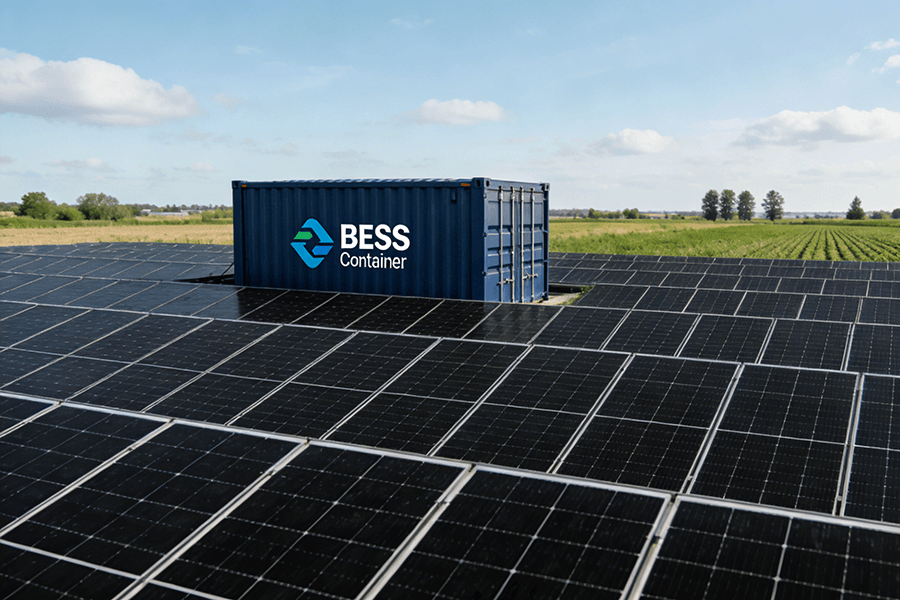
Enter the European Data Center BESS (Battery Energy Storage System) Container—a compact, all-in-one solution that solves all three pain points at once. Think of it as your data center’s “energy Swiss Army knife”:
- It slashes costs (the “financial diet”),
- Cuts emissions (the “sustainability workout”),
- And guarantees zero downtime (the “24/7 reliability guarantee”).
Let’s break down its unrivaled value.
Core Value 1: UPS 2.0—Ditch the Lead-Acid Dinosaurs
Lead-acid UPS systems are the data center equivalent of using a typewriter in 2025: they “work,” but they’re heavy, messy, and drain resources. BESS containers? They’re the sleek laptop with a 10-hour battery—faster, smarter, and far cheaper to maintain.
UPS Performance: BESS vs. Lead-Acid (By the Numbers)
|
Performance Metric
|
Lead-Acid UPS
|
Data Center BESS Container
|
Real-World Impact
|
|
Response Time
|
20-50ms
|
<10ms
|
No data loss during grid blips—even sensitive AI servers stay online.
|
|
Annual Maintenance Costs
|
€150,000–€300,000 (battery swaps every 3-5 years)
|
40% Lower
|
Save €60,000–€120,000 yearly—funds that can go to server upgrades or team training.
|
|
Lifespan
|
5-7 years
|
10-15 years
|
Fewer replacements mean less landfill waste and long-term cost stability.
|
|
Physical Footprint
|
Bulky (needs 400-500 m² for 10MW capacity)
|
Compact (200 m² for 10MW)
|
Free up 200-300 m² of space for revenue-generating IT equipment.
|
Real-World Win: Google Belgium’s UPS Upgrade
Google swapped lead-acid UPS systems for BESS containers at its Ghent data center in 2023—and the results were transformative:
- Maintenance shutdowns dropped from “monthly” to “negligible,”
- Annual maintenance costs fell by 40% (from €375,000 to €225,000),
- Zero downtime during 2 grid outages in 2024 (thanks to <10ms response time).
As Google’s Energy Manager put it: “We went from scheduling maintenance around the UPS to forgetting it even exists.”
Core Value 2: Peak Shaving & Demand Response—Turn Bills Into Profits
If your data center’s electricity use were a rollercoaster, peak loads are the terrifying drops that make your wallet scream. European utilities charge a 3x premium for peak demand (typically 4-8 PM) because grids can’t handle sudden surges.
BESS containers act like a rollercoaster brake: they store cheap off-peak energy (2-6 AM, when rates are €0.05/kWh) and release it during peaks (€0.25/kWh+), slashing bills and even earning you cash.
The Profit-Boosting Math
|
Strategy
|
Key Benefit
|
Potential Annual Impact (10MW Data Center)
|
|
Peak Shaving
|
Cut peak demand by 20-30%
|
€200,000–€300,000 in electricity cost savings
|
|
Demand Response
|
Earn €50-€150 per MW/h from EU grid programs
|
€280,000–€450,000 in revenue
|
|
Grid Connection Speed
|
Faster approval (3 years vs. 7-10 years in hubs)
|
4-7 years of extra revenue from early launch
|
How Demand Response Programs Work
EU countries offer lucrative incentives for data centers that reduce load during grid stress:
- Germany’s Flexmarkt: Pays €80-€150 per MW/h for cutting demand during peak hours.
- France’s Réponse à la Demande: Rewards participants with €50-€120 per MW/h and priority grid access.
- Italy’s Mercato dei Servizi: Guarantees 3-year grid connection for data centers with BESS, vs. 7+ years for others.
For a 10MW data center, these programs alone can add €300,000+ to annual profits—with zero impact on operations.
Core Value 3: Carbon Neutrality—From “Climate Villain” to “Eco Warrior”
Data centers have a PR problem: they’re often labeled “energy guzzlers.” But BESS containers are rewriting that narrative by turning sustainability into a competitive advantage.
Two Ways BESS Cuts Emissions
- Boost Renewable Utilization to 65%
Solar and wind power are cheap and clean—but they’re intermittent (sun doesn’t shine at night, wind dies down). BESS containers store excess renewable energy and release it when needed, turning “wasted” power into usable electricity.
Example: A Swedish data center using BESS increased its renewable penetration from 38% to 65% , cutting CO2 emissions by 4,200 tons annually .
- Eliminate Diesel Generator Emissions
Diesel generators are the “last resort” for backups—but they’re climate nightmares, emitting CO2, NOx, and particulate matter. BESS containers replace 90% of diesel use for backups, slashing emissions by up to 8,000 tons per year (10MW data center)—equivalent to taking 1,700 cars off the road .
Why This Matters for Compliance
The EU’s Carbon Border Adjustment Mechanism (CBAM)—launched in 2023—taxes high-emission imports. Data centers that fail to cut emissions will face higher costs for hardware, software, and services. BESS containers aren’t just “green”—they’re a defense against CBAM penalties.
Technical Bonus: Space-Saving—Because Every Square Meter Counts
Data center real estate is absurdly expensive: in London, Amsterdam, and Frankfurt, floor space costs €2,500–€3,000 per m² . Lead-acid UPS systems require dedicated rooms with ventilation, fire suppression, and extra space for maintenance—wasting valuable square meters.
BESS containers are game-changers here:
- They’re containerized (fit in parking spaces or on rooftops),
- Require zero additional infrastructure (no dedicated rooms),
- Take up just 200 m² for 10MW capacity (vs. 400-500 m² for lead-acid).
For a data center in Amsterdam, that’s 300 m² of extra space—enough for 1,200 more servers. At €3,000 per m², that’s €900,000 in additional annual revenue (from server hosting fees).
Case Studies: BESS Containers in Action (Spoiler: They’re Killing It)
Talk is cheap—let’s look at two real-world examples of BESS containers delivering results for European data centers.
AWS Ireland: €1.2M Annual Savings + 8,000 Tons CO2 Cut
AWS deployed a 10MW BESS container at its Dublin data center in 2024. Here’s what happened:
- Cost Savings: €1.2 million annually (peak shaving + demand response).
- Emissions Reduction: 8,000 tons of CO2 eliminated (equivalent to planting 200,000 trees).
- Reliability: Zero downtime during 3 grid outages in 2025 (thanks to <10ms response time).
Ember’s Elisabeth Cremona (a leading energy analyst) called it: “A blueprint for the industry—proof that sustainability and profitability don’t conflict.”
Regional Win: Spanish Data Center (Madrid)
A mid-sized Spanish data center (5MW) adopted BESS in 2023:
- Electricity costs dropped by 22% (€180,000 saved yearly).
- Renewable use jumped from 40% to 62%, helping it meet Spain’s 2030 targets.
- Grid connection was approved in 2.5 years (vs. the national average of 6 years).
Future Outlook: 60% of Large Data Centers Will Adopt BESS by 2027
The writing’s on the wall: BESS containers aren’t a trend—they’re the future of European data centers. Here’s what industry forecasts predict :
Key Market Projections
- By 2027, over 60% of European data centers with >5MW capacity will deploy BESS containers .
- The European data center BESS market will grow from (2.3 billion (2025) to )5.7 billion (2030)—a 147% increase.
- Emerging hubs (Nordics, Southern Europe) will lead adoption, as they compete to attract AI and cloud companies.
Why the Rush?
Data center operators are waking up to a simple truth: BESS containers aren’t just a “cost-cutting tool”—they’re a strategic advantage. In a world where grid congestion, carbon mandates, and downtime risks are worsening, BESS is the only solution that checks all three boxes.


Why Choose Maxbo Solar? (From Our Team to Yours)
At Maxbo Solar (www.maxbo-solar.com), we’re not just selling BESS containers—we’re solving Europe’s data center energy crisis, one container at a time. As a leading provider of solar and energy storage solutions for European markets, we’ve designed our Data Center BESS Containers to address your unique challenges.
Our BESS Difference
|
Feature
|
What It Means for You
|
|
European-Proven Durability
|
Tested to survive -25°C Nordic winters and 40°C Mediterranean summers. No “one-size-fits-all” solutions—we tailor systems to your location.
|
|
Plug-and-Play Simplicity
|
Pre-assembled containers arrive ready to use. Deploy in 4-6 weeks (vs. 3-6 months for custom builds).
|
|
Data-Driven Monitoring
|
IoT-enabled dashboards track real-time savings, emissions cuts, and system health. No guesswork—see exactly how much you’re saving.
|
|
EU Compliance Experts
|
We navigate demand response programs, carbon credits, and grid rules for you. Maximize ROI while staying compliant.
|
Our Track Record
We’ve helped data centers across Europe—from AWS Ireland to regional players in Spain and Poland—achieve:
- 20-30% lower electricity costs,
- 40-65% higher renewable penetration,
- Zero downtime during grid outages.
Ready to Join the BESS Revolution?
Visit www.maxbo-solar.com today to request a free consultation. Our team will audit your data center’s energy needs, calculate potential savings, and design a BESS solution that fits your budget and goals. Let’s turn your energy headaches into wins—together.