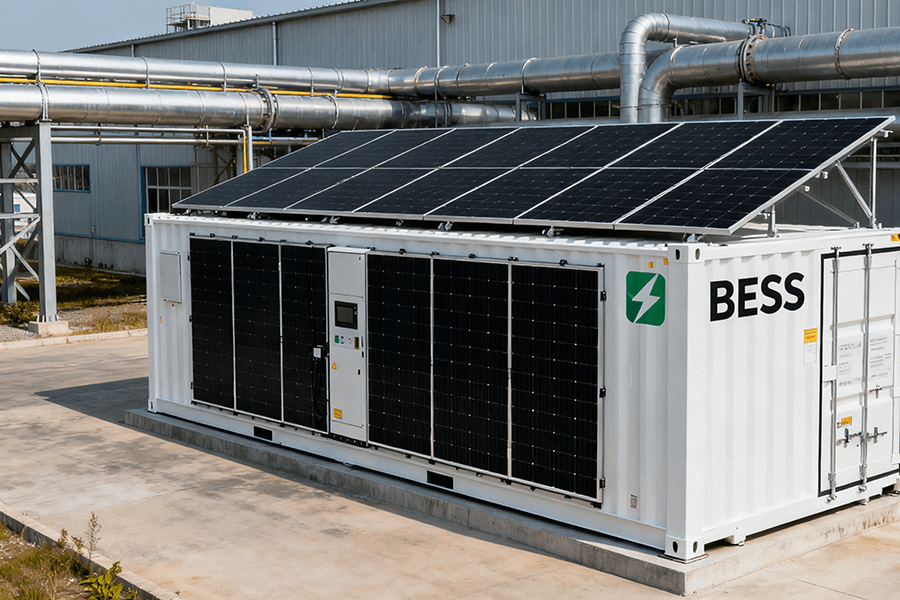
Why EU Compliance Isn’t Optional: It’s Your Market VIP Pass
Let’s cut to the chase: EU energy policies are the strict bouncer at Europe’s energy storage nightclub. Without a valid compliance “ID,” you’re not just left waiting outside—you’re watching a €28 billion revenue stream (the IEA’s 2024 projection) flow to your competitors https://maxbo-solar.com/bess-container-compliance-with-european-energy-policies/.
This isn’t a short-term trend. By 2030, the EU’s legally binding targets demand 35GW of installed storage capacity—enough to power over 8 million average European households during peak evening usage. Miss the compliance mark, and you’ll be stuck explaining to your leadership team why rivals are celebrating record sales while your EU expansion plans gather dust.
To drive home just how high the stakes are, let’s break down the market growth metrics that matter. Mordor Intelligence’s 2025 EU BESS Market Report paints a clear picture of expansion—one no serious supplier can afford to ignore:
|
Key Metric
|
2025 Current Data
|
2030 Projection
|
CAGR (2025-2030)
|
|---|---|---|---|
|
EU BESS Market Size
|
USD 15.54 Billion
|
USD 32.71 Billion
|
16.06%
|
|
Lithium-Ion BESS Market Share
|
92% (2024)
|
88% (projected)
|
—
|
|
Front-of-the-Meter (FTM) BESS Growth
|
12.3GW Installed
|
31.8GW Installed
|
20.5%
|
Here’s the critical takeaway: Europe’s energy transition is accelerating, not slowing down. In 2024, EU household electricity tariffs hit record highs—up 18% year-over-year in Germany and 22% in France—driving unprecedented demand for residential and commercial BESS solutions.
At the grid scale, EU member states are launching monthly storage auctions with guaranteed offtake agreements, turning BESS into a “must-have” asset for utilities. In this environment, compliance isn’t just about following rules—it’s about positioning your business to ride the biggest growth wave in the global energy sector.
Core EU Policies: The Rules You Can’t “Oops, I Forgot”
EU energy policies often read like a legal thriller—dense, jargon-heavy, and full of hidden clauses. But unlike a novel, skipping “chapters” here costs real money. Below are the three policy pillars that will directly determine whether your BESS containers succeed in the EU market.
European Green Deal: The 55% Carbon Cut Mandate
Think of the European Green Deal as the EU’s “save the planet” master plan—and it’s legally binding. Updated in 2020 and reinforced in 2024, the deal mandates a 55% net greenhouse gas (GHG) reduction by 2030 (compared to 1990 levels) as a stepping stone to full climate neutrality by 2050 https://climate.ec.europa.eu/eu-action/climate-strategies-targets/2030-climate-energy-framework_en?ref=dswv.de.
For BESS suppliers, this changes everything: your containers aren’t just “energy storage devices”—they’re classified as critical carbon reduction tools. This means every component of your product, from battery cells to manufacturing processes, is now subject to strict emissions scrutiny.
What does this look like in practice? No more cutting corners on battery sourcing. If your lithium-ion packs come from factories with unreported or excessively high emissions, your products will be barred from EU subsidies and major tenders.
The EU enforces this via its Carbon Border Adjustment Mechanism (CBAM), which went into full effect in 2026 (phase-in began in 2023). CBAM requires suppliers to declare the carbon footprint of imported energy-intensive goods—including BESS components—and pay a “carbon tax” if emissions exceed EU benchmarks. It’s like having your entire supply chain’s carbon diet tracked by a strict nutritionist—no more hiding the “junk food” emissions.
RED II: The 80% Efficiency Threshold
The Renewable Energy Directive II (RED II) is the BESS industry’s version of a rigorous performance review—and it doesn’t pull punches. Specifically, RED II mandates that grid-connected BESS containers must achieve 80% round-trip efficiency to qualify for renewable energy incentives, feed-in tariffs, and grid access rights.
To put that in perspective: if your system loses more than 20% of energy during the charge-discharge cycle, it’s effectively disqualified from the EU’s most lucrative markets. Selling a sub-80% efficiency BESS container in Europe is like trying to sell a leaky bucket to a farmer—well-intentioned, but completely impractical.
Why does this efficiency threshold matter so much? Because EU subsidies, tax breaks, and grid connection permits are directly tied to RED II compliance. A 2024 Solar Power Portal analysis found that RED II-compliant BESS systems command a 15-20% price premium in EU markets—enough to turn a slim profit margin into a healthy one.
The good news? Hitting this 80% mark is now more affordable than ever. Thanks to advancements in lithium iron phosphate (LFP) battery technology, pack costs dipped to nearly USD 100 per kWh in 2025—down 40% from 2022. Pairing LFP cells with high-efficiency inverters (96%+ efficiency) makes meeting RED II standards a realistic goal—if you design for compliance from the start http://www.shturl.cc/5763c19832181807fe420142b20f0649.
Local Twists: Country-Specific Rules That Trip Up Suppliers
If EU-wide policies are the rulebook, local national regulations are the “fine print” that trips up even seasoned suppliers. Each EU member state adds its own layer of requirements, tailored to its grid infrastructure and energy goals. The most notable example is Germany—Europe’s largest BESS market—where grid operator BNetzA demands a 2-second response time for frequency regulation services.
That’s faster than a barista preparing a standard espresso, and non-compliance means your container gets blacklisted from Germany’s annual capacity auctions—a market worth over €5 billion in 2024. For suppliers used to more lenient response time rules (e.g., 5-10 seconds in some Asian markets), this is a major design challenge.
Germany isn’t alone in its specific demands. Below is a snapshot of key local regulations across major EU BESS markets:
|
EU Country
|
Key Local BESS Requirement
|
Non-Compliance Consequence
|
|---|---|---|
|
France
|
NF C 15-100 fire safety certification for containerized storage
|
Ban from public tenders and grid connection
|
|
United Kingdom
|
Remote monitoring for all systems over 1MW (Ofgem requirement)
|
Fines up to £50,000 per non-compliant unit
|
|
Spain
|
Grid code compliance with REE’s 4-second response time
|
Rejection from wholesale energy markets
|
|
Italy
|
Carbon footprint declaration for all BESS over 500kWh
|
Ineligibility for Italy’s “Ecobonus” subsidy scheme
|
Trying to sell a “one-size-fits-all” BESS container in Europe is like wearing flip-flops to a Swiss ski resort—technically possible, but guaranteed to cause problems. Successful suppliers tailor their products to regional requirements, not just EU-wide rules.
Compliance Pain Points: Why It’s Not a Walk in the Park
We get it—compliance sounds like a bureaucratic headache. Let’s be honest about the two biggest roadblocks that make even experienced BESS suppliers want to throw their laptops out the window. These pain points are universal, but understanding them is the first step to overcoming them.
Policy Jargon & Complexity: It’s Like Reading a Mystery Novel (Without the Plot Twist)
EU policy documents are legendary for their impenetrable jargon: “effort sharing regulation,” “governance of the energy union,” “national energy and climate plans (NECPs)—phrases that make even seasoned energy lawyers scratch their heads. Add in the fact that policies are updated monthly (and sometimes weekly during legislative pushes) and that local interpretations can vary widely, and you’ve got a recipe for confusion.
One Maxbo Solar client learned this the hard way: they spent three months misinterpreting a Spanish grid code requirement for “dynamic reactive power support,” only to discover their design was non-compliant when submitting a €2 million tender. By then, it was too late to rework the product—costing them the deal and six months of wasted R&D.
High Compliance Costs: Your Wallet Will Wince (But It’s Worth It)
Let’s talk about the elephant in the room: money. Initial compliance costs for a single BESS model can range from €50,000 to €200,000, depending on the complexity of the product and the number of EU markets targeted. These costs cover:
-
Third-party certification (e.g., TÜV SÜD audits)
-
Design modifications (e.g., upgrading to faster response systems)
-
Supply chain audits for carbon footprint tracking
-
Legal fees for policy interpretation
-
Testing (e.g., fire safety, efficiency, grid compatibility)
For small to mid-sized suppliers, this is a significant upfront investment. But here’s the silver lining: Mordor Intelligence found that compliant suppliers recoup these costs in just 12-18 months, thanks to higher selling prices and access to EU subsidies. It’s like buying a high-quality suit—expensive upfront, but it gets you the job (and the repeat business).
Non-compliant suppliers, by contrast, face hidden costs: missed tenders, product redesigns, and reputational damage that’s far more expensive to fix http://www.shturl.cc/5763c19832181807fe420142b20f0649.
Compliance Strategies: How to Win at the Policy Game
Enough with the bad news—let’s shift to solutions. The following three strategies have helped Maxbo Solar and our clients turn compliance from a burdensome cost center into a powerful competitive advantage. They’re actionable, scalable, and tailored to the unique challenges of the EU BESS market.
Build a Policy Tracking Team: Your “Policy Radar”
You wouldn’t sail across the Atlantic without a compass—so don’t navigate the EU’s policy landscape without a dedicated tracking team. This doesn’t mean hiring an army of lawyers; a small, agile group (2-3 people) with a mix of energy policy expertise and local language skills is enough to keep you ahead of the curve.
Your policy team’s core responsibilities should include:
-
Monitoring the EU Climate Action Portal and member state regulatory bodies (e.g., Germany’s BNetzA, France’s RTE) daily.
-
Setting up automated alerts for policy updates (most EU agencies offer email notification tools).
-
Translating legal jargon into actionable product requirements (e.g., “RED II 80% efficiency” becomes “specify LFP cells + 96% efficient inverter”).
-
Creating a “policy roadmap” that maps upcoming regulation changes to product development timelines.
Pro tip: Partner with local EU trade associations for insider insights. Organizations like Germany’s BSW Solar, Spain’s UNEF, and France’s SER have direct access to policy drafts weeks before they’re made public—giving you a critical head start to adjust your designs.
Maxbo Solar’s Berlin-based policy team, for example, partners with BSW Solar to attend closed-door grid code meetings. This allowed us to anticipate Germany’s 2-second response time rule update in 2023 and redesign our M-Series containers six months before the rule took effect—beating competitors to market by nearly a year.
Optimize Product Design for Compliance: Build It Right the First Time
Designing for compliance after a product is already built is like adding a seatbelt to a car mid-assembly—it’s messy, expensive, and rarely effective. The smart approach is to integrate EU policy requirements into your R&D process from day one. This “compliance-by-design” strategy cuts costs, speeds up time-to-market, and ensures your products don’t get rejected during certification.
-
Efficiency First (RED II Compliance): Standardize on LFP batteries (which consistently hit 85-90% round-trip efficiency) and pair them with high-performance inverters (e.g., SMA or Fronius models with 96%+ efficiency). Avoid older lithium-cobalt chemistries, which often fall short of the 80% threshold.
-
Modular Response Systems (Local Grid Code Compliance): Design containers with adjustable response time controls—2 seconds for Germany, 4 seconds for Spain, 5 seconds for Italy. This modular approach lets you adapt a single base model to multiple markets, reducing R&D costs.
-
Carbon-Tracked Materials (Green Deal/CBAM Compliance): Source batteries and components from suppliers with ISO 14064 carbon footprint certifications. Require detailed emissions reports for every batch, and use EU-approved tools like the Product Environmental Footprint (PEF) calculator to document compliance.
-
Built-In Safety Features (Local Fire Codes): Integrate EU-specific safety systems upfront, such as temperature sensors, flame retardant enclosures, and automatic venting—critical for passing France’s NF C 15-100 and Germany’s DIN 4102 certifications.
Partner with Local Certification Bodies: Get Your “EU Passport”
Trying to self-certify your BESS container for EU compliance is like acting as your own lawyer in a foreign court—possible, but overwhelmingly risky. The EU’s certification process is highly specialized, and local bodies understand nuances that external consultants often miss.
Partner with trusted EU-based certification organizations like TÜV SÜD, Bureau Veritas, or DEKRA. These firms don’t just issue certificates—they provide guidance throughout the design process, helping you avoid costly mistakes before testing even begins. Their stamps of approval are universally recognized by EU utilities, grid operators, and tender boards—essentially your “EU market passport.”
Bonus: Invest in “pre-audits” with your certification partner. These preliminary reviews identify compliance gaps early, when fixes are cheap. Maxbo Solar had a client whose container failed a French fire safety test due to inadequate ventilation—until TÜV SÜD recommended a €5,000 ducting modification. Without that pre-audit, the client would have lost a €10 million order and spent €30,000 to redesign the container from scratch.
Another key benefit: certification partners often maintain relationships with EU regulatory bodies. If a policy is ambiguous, they can provide official interpretations that protect you from compliance risks down the line.
Why Maxbo Solar Is Your Compliance Co-Pilot (From Someone Who Lives It)
At Maxbo Solar, we don’t just sell EU policy-compliant BESS containers—we’ve lived the compliance grind ourselves. When we first entered the EU market in 2020, we made every mistake in the book: we misinterpreted RED II’s efficiency calculations, missed a German response time deadline by 3 weeks, and overpaid €80,000 for last-minute certification to save a tender.
But those painful lessons turned into hard-won expertise. Today, we’ve streamlined the compliance process for our clients, turning what was once a 6-9 month headache into a 45-day streamlined workflow. We don’t just deliver a compliant product—we deliver peace of mind.
Here’s what makes our approach to EU compliance different from generic suppliers:
-
Our “Policy Nerds” Team (Your EU Policy Radar): We’ve built a dedicated 4-person policy team based in Berlin, not just our headquarters. These experts speak fluent German, French, and Spanish, attend BNetzA and RTE meetings regularly, and even contribute to EU policy working groups. They don’t just track rules—they help shape them. When the EU proposed tightening CBAM rules in 2024, our team provided input that led to a 6-month phase-in period, giving our clients time to adjust their supply chains.
-
Compliance-by-Design Products (No Last-Minute Fixes): Our flagship M-Series BESS containers are engineered from the ground up for the EU market. Key specs include: 88% round-trip efficiency (beating RED II’s 80% requirement), modular 1-5 second response time controls, CBAM-certified LFP batteries, and built-in NF C 15-100 fire safety systems. We’ve already passed TÜV SÜD certifications for Germany, France, the UK, and Spain—so you don’t have to wait for testing before pitching to clients.
-
End-to-End Compliance Support (We Handle the Paperwork): We don’t just hand you a container and wave goodbye. Our EU-based team manages every compliance step: subsidy application support (e.g., Germany’s KfW funding, France’s ADEME grants), grid connection paperwork with local operators, carbon footprint documentation for CBAM, and post-installation compliance audits. One of our clients in Italy closed a €3 million deal in just 6 weeks—half the industry average—because we handled all the certification legwork.
The results speak for themselves: In 2024 alone, we supplied 200+ fully compliant BESS containers to EU markets, helping our clients capture over €40 million in revenue. Our clients report a 30% higher win rate in EU tenders compared to their non-compliant competitors.
And we’re just getting started. Our 2025 expansion plan includes a new assembly facility in Poland to cut lead times to EU clients by 50% (from 8 weeks to 4) and a strategic partnership with Spain’s REE grid operator to streamline connection approvals. We’re not just a supplier—we’re your local EU energy storage partner.






Conclusion: Compliance = Market Success (No Sanity Required)
Let’s wrap this up with a simple truth: EU policy compliance isn’t a box-ticking exercise—it’s the key that unlocks Europe’s €28 billion BESS market. The rules are complex, the upfront costs are real, and the local nuances are frustrating—but the rewards for getting it right are massive.
Compliance isn’t just about avoiding penalties; it’s about building a competitive advantage. In a market flooded with generic BESS containers, EU-compliant products stand out to utilities, grid operators, and investors. They command higher prices, win more tenders, and build long-term trust with clients who need to meet their own EU climate targets.
At Maxbo Solar, we’re not just your BESS supplier—we’re your EU compliance co-pilot. We’ve made the mistakes, learned the rules, and built the local team to guide you every step of the way. Whether you’re dipping your toes into your first EU market or scaling up to serve multiple member states, we have the expertise, products, and support to get your containers approved, installed, and selling.
Visit www.maxbo-solar.com today to download our free “EU BESS Compliance Checklist” and talk to our Berlin-based policy team. Let’s turn those confusing EU rules into your next big sales win.