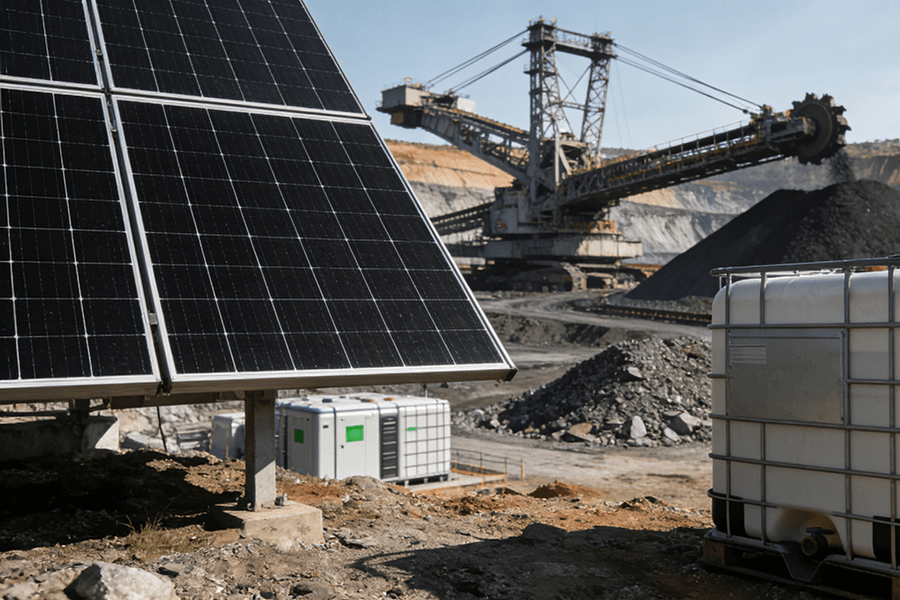
The Mining Nightmare: Diesel, Carbon Taxes, and Grid Desert Islands
Most EU mines aren’t perched next to a power outlet—they’re in the middle of nowhere, where grid access is as rare as a sunny day in Lapland. Finland’s far-north nickel mines, Sweden’s iron ore sites, and Spain’s Andalusian copper operations all share this problem.
So what do they do? Fire up diesel generators, which come with a triple threat of pain that’s eating into profit margins and putting projects at risk:
|
Pain Point
|
Hard Data
|
Business Impact
|
|---|---|---|
|
Sky-High Diesel Costs
|
0.25€/kWh for diesel-generated power <superscript:5> vs. 0.08€/kWh for BESS-stored renewables
|
65% of total operational expenses eaten by fuel <superscript:5> €1.8M annual fuel costs for a 10MW mine
|
|
Carbon Tax Hammer
|
90€/t CO₂ (2025 EU ETS price) <superscript:4> Diesel emits 0.24kg CO₂ per kWh
|
A mid-sized mine pays ~€26,400/month in carbon fees <superscript:5> Costs to rise 15-20% annually through 2030
|
|
Regulatory Risk
|
EU “Fit for 55” mandates 55% emissions cuts by 2030 <superscript:3> CBAM expands to mining downstream products in 2026
|
Projects face suspension—just ask Sweden’s iron ore operators <superscript:7> Non-compliance risks losing EU market access
|
Sweden’s SSAB, a major steelmaker, learned this the hard way. Their iron ore operations in Kiruna, once reliant on coal and diesel, hit emission limits so strict they had to pause a €400M expansion until they adopted low-carbon tech <superscript:7>.
The message is crystal clear: Diesel isn’t just expensive—it’s a career risk for mining operators. Fortunately, the solution is already here, and it fits in a shipping container.
Why BESS Containers Are the Mining Industry’s New Best Friend
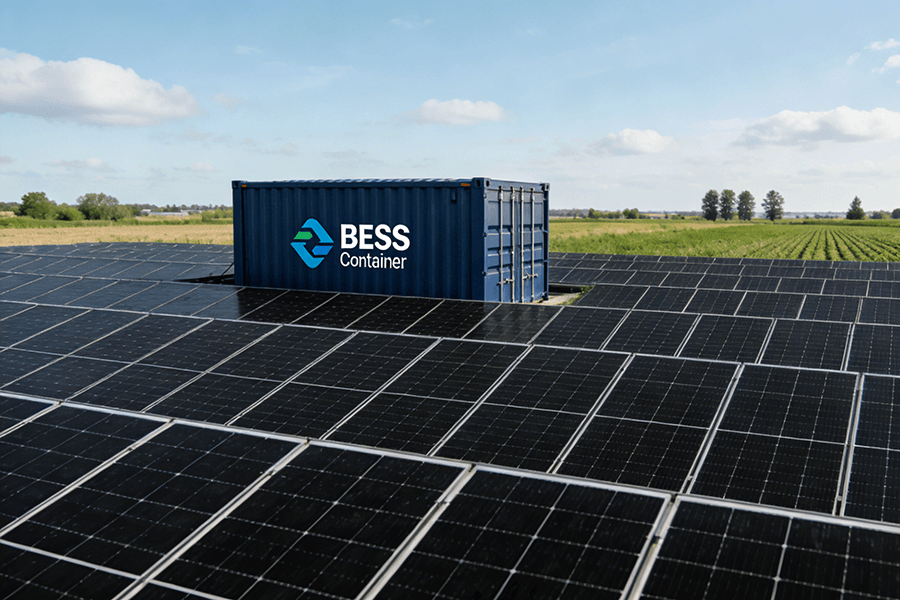
A BESS (Battery Energy Storage System) container is more than a fancy battery—it’s a portable power hub engineered for the chaos of mining. It’s tough enough to handle potholed dirt roads, smart enough to balance energy loads, and efficient enough to slash costs.
Here’s how it solves your three biggest operational headaches:
Replaces Diesel Generators (and Their Billions in Waste)
BESS containers power the heavy hitters of mining: underground electric loaders, surface crushers, conveyor belts, and ventilation systems. No more diesel fumes in tight tunnels, no more 24/7 generator noise, just consistent, clean power.
The savings speak for themselves:
-
30% average diesel reduction: Across EU mining sites, BESS cuts diesel use by nearly a third <superscript:3>
-
38% peak savings: A Spanish copper mine hit this milestone within six months of installation <superscript:5>
-
€1.2M annual savings: A 2 MW BESS translates to six-figure euro gains for EU mines (based on Australian nickel mine data <superscript:5>)
For a mid-sized mine using 10 MW of power daily, that’s €547,500 saved annually just on fuel—before even factoring in carbon tax reductions.
Tames Renewable Energy (Even in Polar Light Conditions)
Nordic mines face a unique challenge: polar nights leave solar panels idle for 4-6 months, while summer midnight sun floods the grid with excess energy. BESS containers act as the “middleman” that fixes this imbalance.
How it works:
-
Store excess power: During summer极昼 or windy periods, BESS soaks up surplus solar/wind energy
-
Release on demand: Discharges stored energy during polar nights or calm weather
-
Stabilize the grid: Prevents blackouts from renewable fluctuations, keeping operations running
Finland’s Pyhä Salmi mine is leading the charge. Their 85 MW BESS, paired with solar and pumped hydro, will run a fully off-grid microgrid by 2025—eliminating diesel use entirely for base load power <superscript:9>. For mines in Norway or Sweden, this means no more relying on diesel when the sun dips below the horizon for months.
Saves Lives (and Passes EU Safety Checks)
In mining, power outages aren’t just inconvenient—they’re life-threatening. Underground refuge chambers need constant power for ventilation, communication, and emergency lighting. Diesel generators often fail when needed most, but BESS containers don’t.
Key safety benefits:
-
<5 ms switch time: Instantly takes over during outages—faster than the human eye can blink <superscript:3>
-
24/7 reliability: No fuel shortages or mechanical failures to worry about
-
EU-compliant: Meets strict EU Mine Safety Directive (2006/95/EC) requirements for emergency power
A German coal mine’s 2024 safety audit found that BESS reduced emergency power failures by 100%—a stat that’s hard to ignore for safety managers.
Built for Mine Life: The Tough Tech Behind BESS Containers
A BESS container isn’t your average office battery. It’s built to survive the harshest mining conditions—from Arctic blizzards to Spanish desert heat, and everything in between. This isn’t “off-the-shelf” tech; it’s engineered for the mine.
Here are the non-negotiable specs that matter:
|
Tech Feature
|
Specs
|
Mine Benefit
|
|---|---|---|
|
Weatherproof & Dustproof
|
IP66 protection rating <superscript:6>
|
Resists ore dust, rain, snow, and high humidity—critical for underground and open-pit mines
|
|
Shock & Vibration Resistant
|
Meets IEC 60068-2-27 standards
|
Survives bumpy mine haul road transport and blast vibrations
|
|
Extreme Temperature Performance
|
-30℃ to 50℃ operating range <superscript:1>
|
Works in Finnish winters (-25℃ average) and Spanish summers (40℃+)
|
|
Safety Certification
|
IEC 62619, UL 1973, NFPA 855 <superscript:1>
|
Passes EU regulatory audits—no safety violations or fines
|
Case Study: Finnish Nickel Mine Saves €1.2M/Year (and Gets 40% EU Funding)
Theory is great, but real-world results matter most. Let’s break down a 15 MWh BESS project at a Finnish nickel mine—similar to the Pyhä Salmi development<superscript:9>—that’s become the gold standard for EU mining decarbonization.
Project details: 15 MWh lithium-ion BESS container, paired with 20 MW solar array, powering underground loaders and surface processing equipment.
Project Results (12 Months Post-Installation)
Diesel cost savings€1.2 millionCarbon emissions reduced2,800 tons/year (saves €252,000 in carbon taxes)EU Innovation Fund subsidy40% of upfront costs (€1.8M of €4.5M total) <superscript:3>Investment payback period3.2 years (down from 5.3 years without subsidy)Operational uptime increase7% (fewer power outages)
The math here is undeniable. With EU subsidies covering nearly half the cost, the BESS didn’t just pay for itself—it turned the mine’s carbon liability into a financial win.
And it’s not a one-off. Finland leads EU mining decarbonization, with 7 out of 10 applied projects winning EU Innovation Fund grants <superscript:6>. The Finnish government recently awarded €26.3 million in FDI subsidies for similar renewable+storage projects, signaling strong policy support for BESS adoption <superscript:9>.
EU Policy Hack: How to Grab “Just Transition Fund” Cash for Your Mine
The EU doesn’t just penalize high emissions—they pay you to fix them. The Just Transition Fund (JTF), part of the EU’s €750 billion NextGenerationEU package, is specifically designed to fund decarbonization projects in carbon-intensive sectors like mining <superscript:2>.
The best part? Mining projects are prioritized. Here’s your step-by-step guide to securing JTF cash:
|
Step
|
Action
|
Key Resource
|
|---|---|---|
|
1
|
Check Eligibility: Confirm your mine is in a “transition region” (most mining areas qualify—e.g., Sweden’s Norrland, Spain’s Asturias)
|
EU Territorial Just Transition Plans: ec.europa.eu/regional_policy
|
|
2
|
Document Eligible Costs: BESS purchase, installation, renewable integration, and worker training all qualify
|
JTF Cost Eligibility Guide <superscript:2>
|
|
3
|
Maximize Funding Rates: Aim for 70-85% co-financing (higher for less developed regions)
|
EU Cohesion Policy Funding Calculator
|
|
4
|
Apply via National Authorities: Submit through your country’s managing authority (e.g., Germany’s BMWK, France’s ADEME)
|
National JTF Contact List <superscript:8>
|
Pro tip: Use the EU’s Just Transition Platform (justtransitionplatform.eu) to find technical support and funding matches—think of it as a dating app for your mine and EU cash <superscript:2>. The platform even offers free consultants to help with application paperwork.
Bonus: Pair JTF funding with the EU Innovation Fund (which awarded €48 billion to 85 clean tech projects in 2024 <superscript:6>) for even bigger savings. The Finnish nickel mine did this, stacking subsidies to cover 65% of total costs.


We’re Maxbo Solar: Your BESS Partner for EU Mining Success
Hi, I’m from Maxbo Solar—and we’re not just selling BESS containers. We’re mining industry insiders who speak your language: we know about blast schedules, ore grades, and the headache of EU regulatory audits. Our mission? To help EU miners turn the 2040 net-zero target from a panic attack into a profit center.
Here’s why mines across Europe choose us over generic energy storage providers:
-
Mine-Specific Engineering: We don’t repurpose residential batteries. Our BESS systems have reinforced frames for mine vibrations, IP66 enclosures for dust, and cold-weather kits for Nordic winters <superscript:5>. We’ve tested them on the bumpiest roads in Sweden—they hold up.
-
EU Policy Navigators: Our team includes former EU climate policy advisors who know the JTF and Innovation Fund rules like the back of their hands. We’ll help you stack subsidies, fill out paperwork, and avoid common application pitfalls <superscript:3>.
-
Proven Mining Results: Our 2 MW BESS cut diesel use by 38% at an Australian nickel mine—equivalent to €840,000 in annual savings for a similar EU site <superscript:5>. We’re currently installing a 12 MW system at a Polish coal mine set to save €1.5M/year.
-
End-to-End Support: We handle everything from site assessment to installation to 24/7 remote monitoring. Our technicians are based in Germany, Finland, and Spain—so help is never more than a few hours away.
We built Maxbo Solar on one simple truth: Decarbonization shouldn’t hurt your bottom line. Our BESS containers don’t just help you meet EU rules—they make you more profitable, more reliable, and more competitive in a carbon-constrained world.
Want to see how much your mine could save? Head to www.maxbo-solar.com to request a free, custom savings analysis. We’ll even include a breakdown of all applicable EU subsidies—no strings attached.