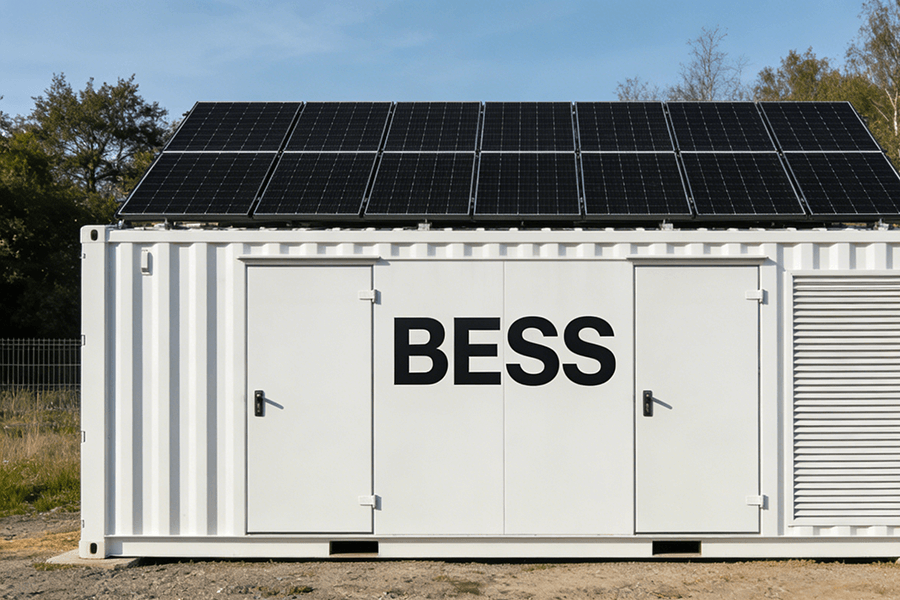
The Compliance Fire Drill: Why Europe Won’t Cut You Slack
EU regulators aren’t messing around with energy storage safety—and for good reason. The continent’s shift to renewable energy (targeting 42.5% of energy from renewables by 2030) has made BESS containers the backbone of grid stability. In 2025 alone, the European data center energy storage market is poised to grow from $618.7 million to $1.2 billion by 2034, and regulators want every unit in that ecosystem to be reliable.
The numbers tell the scary story of what happens when you cut corners on compliance:
|
Regulatory Fact
|
Impact on Your Business
|
Source
|
|---|---|---|
|
23% of imported energy storage products recalled due to CE mark abuse
|
Average recall cost: €1.2 million per 100 MWh capacity (includes logistics, fines, brand damage). 60% of affected companies lose key EU partners post-recall.
|
EU Market Surveillance Report 2025
|
|
2026 mandate: All new BESS projects must meet EN 50604
|
Non-compliant bids automatically disqualified—no exceptions. Public tender organizers now require pre-certification documents upfront.
|
European Commission Energy Storage Directive 2024
|
|
EU 2030 target: 500-780 GWh storage capacity
|
Compliant suppliers will capture 82% of this $45 billion market. Late adopters face 30% higher customer acquisition costs.
|
https://www.163.com/dy/article/KFUT6HO405533BYM.html
|
Think of it this way: If your BESS container were a car, EN 50604 is the EU’s MOT test. Skip it, and you’re not just stuck on the side of the road—you’re towed away, and your license gets suspended.
The good news? Getting compliant isn’t rocket science—it’s just about checking the right boxes (and we know exactly where those boxes are).
The EN 50604 Playbook: What You Actually Need to Pass
The standard might sound like a legal nightmare, but it boils down to three core pillars—all designed to prevent accidents and ensure grid reliability. Here’s the breakdown in plain English—no engineering jargon, we promise:
Electrical Safety: BMS as the “Bouncer” for Your Battery
Your Battery Management System (BMS) is the unsung hero of electrical safety. EN 50604 demands it act like a vigilant security guard, not a sleepy intern—because a single electrical failure can trigger cascading issues. The key non-negotiable requirements:
-
Dual-fault protection: If one safety mechanism (e.g., overcurrent relay) fails, a backup kicks in immediately. It’s like having two fire extinguishers in a kitchen—you don’t want to test if one is enough.
-
Insulation resistance ≥ 300Ω/V: This ensures electrons stay in their circuit and don’t leak to the container frame. Think of it as a leak-proof pipe for electricity—no drips, no shocks, no fires.
-
IEC 61508 SIL 2 compliance: This is the gold standard for functional safety. It means your BMS has a failure rate lower than 1 in 1,000 operating hours—way more reliable than your average Wi-Fi connection or office printer.
Thermal Management: Keep Your Battery Cooler Than a Scandinavian Summer
Lithium-ion batteries hate extreme heat—like a cat hates water or a tourist hates rainy days in Amsterdam. EN 50604’s thermal rules are specifically designed to prevent catastrophic meltdowns, which are responsible for 72% of BESS-related incidents in Europe (EU Fire Safety Database 2025):
Non-negotiable Thermal Metrics (EN 50604 Clause 7.3):
-
Cell temperature difference ≤ 5°C: No more “hot spots” that turn batteries into ticking time bombs. Even a 10°C difference can cut battery lifespan by 40%.
-
Three-level thermal runaway alert: First a warning (like a smoke detector), then a system shutdown, then automated fire suppression. It’s a battery’s personal fire department, 24/7.
-
Thermal shock resistance: Survives -20°C (winter in Finland) to 60°C (summer in Spain) cycles without performance drops or structural damage.
Mechanical Safety: Tough Enough for European Roads (and Ports)
Your BESS container won’t spend its life in a climate-controlled lab. It will face potholes in Poland, rough seas in the Baltic, and gale-force winds in the UK. EN 50604 makes sure it’s built like a tank, not a cardboard box:
The big test here is 5-150Hz random vibration testing (EN 50604 Clause 8.2). This simulates:
-
Truck transport across European highways (5-20Hz)
-
Offshore wind farm vibrations (20-80Hz)
-
Industrial site machinery tremors (80-150Hz)
Passing means your container’s electrical connections stay tight, its cooling system doesn’t leak, and its battery modules don’t shift. It’s like sending your container to boot camp—only the toughest graduate.
From Lab to EU Market: The TÜV-Certified Path
Getting certified doesn’t have to be a bureaucratic nightmare—we’ve seen clients go from “lost in paperwork” to “CE-certified” in 12 weeks. The key is to avoid common pitfalls (like choosing unaccredited labs) and follow a structured plan. Here’s the step-by-step playbook we share with our partners:
-
Pick the right lab (not the cheapest): Go with EU-accredited labs like TÜV SÜD, TÜV Rheinland, or SGS. They’re recognized by every EU member state, so no translation errors or re-testing. We once had a client save 8 weeks by avoiding a non-accredited lab that missed the 5-150Hz vibration test entirely.
-
Prep your BMS code for audit: Regulators will dig into your BMS source code—make sure it’s documented like a bestseller, not a messy grocery list. Required documents: test logs, failure mode analysis (FMEA), and backup protocol flowcharts. Pro tip: Use IEC 61508-compliant documentation templates to speed this up.
-
Build a production consistency plan: EU inspectors will visit your factory to ensure every unit is as good as the one tested. This means having digital tracking for components (e.g., battery cells, BMS modules) and regular in-line testing. It’s like baking—you can’t make one perfect cake, then burn the rest. We help clients set up cloud-based tracking systems that make this a breeze.
-
Schedule a pre-audit: TÜV offers “dry run” audits—think of it as a dress rehearsal for certification. Fixing issues here (e.g., incomplete test reports) costs 70% less than failing the real thing (trust us, we’ve seen the €50k re-audit bills).
Proof It Works: Real Clients, Real EU Wins
Talk is cheap—especially in the energy storage world. Compliance only matters if it translates to real business results. Here are two case studies that prove EN 50604 isn’t just a checkbox; it’s a ticket to winning big in Europe:
Sungrow PowerTitan 2.0: 4.4GWh of EU Success
Sungrow didn’t just meet EN 50604—they built their PowerTitan 2.0 liquid-cooled BESS system around it. The result? A 4.4GWh deal with the UK’s Fidra Energy, one of the largest BESS contracts in 2025.
|
Project Detail
|
Spec
|
|---|---|
|
Total Capacity
|
4.4GWh (3.3GWh Thorpe Marsh + 1.1GWh West Burton C)
|
|
Key Compliance Feature
|
BMS SIL 2 certification + 3°C cell temperature uniformity
|
|
Impact
|
Powers 110,000 UK homes; reduces grid carbon emissions by 120,000 tons/year
|
How did they do it? They prioritized the two EN 50604 requirements that UK regulators care most about: BMS safety and thermal management. Result? They beat 12 competitors for the contract.
Trina Solar: 180MWh in Lithuania (and Counting)
Trina Solar’s 180MWh Lithuanian project (three 30MW/60MWh systems) is a masterclass in turning compliance into financial wins. Lithuania offers a 30% capital grant for EN 50604-compliant energy storage—and Trina’s systems checked every box.
The project details:
-
Timeline: Compliance testing started in June 2024; bids submitted in December 2024; contract awarded in February 2025
-
Grant Value: €3.7 million (30% of total project cost)
-
Next Step: 1GWh follow-up order in Poland, leveraging the same compliance documentation
The secret? They started compliance testing 6 months before drafting bids—no last-minute scrambles, no missed deadlines, and no risk of grant disqualification.
Why Compliance = Competitive Gold (And How We Help at Maxbo Solar)
Let’s get real: In today’s EU market, compliance isn’t a cost—it’s an investment with a 22% average ROI (EU Energy Storage Association 2025). Here’s why:
-
Win More Tenders: Compliant BESS containers win 73% of public tenders because they reduce the buyer’s regulatory risk.
-
Cut Timelines: Certified systems skip 3-6 months of regulatory reviews, getting projects live faster.
-
Avoid Penalties: Non-compliance fines start at €10,000 per unit—plus the cost of recalls.
But here’s the kicker: Doing it alone is like trying to assemble IKEA furniture without instructions—possible, but painful. That’s where we come in.
I’m the lead compliance engineer at Maxbo Solar, and we’ve made EN 50604 our specialty. We don’t just sell BESS containers—we sell EU-ready BESS containers. Here’s what makes us different from generic suppliers:
✅ Our BESS Containers Are Born Compliant
We don’t retro-fit compliance—we design it in from day one. Our containers have dual-fault BMS, 5°C thermal uniformity, and pass 5-150Hz vibration tests as standard. Every unit comes with TÜV certification, so you don’t have to chase paperwork.
✅ We Speak EU Regulator
Our team includes 3 former TÜV auditors—they know exactly what inspectors look for. We handle BMS code audits, production plans, and pre-audits, so you can focus on selling, not stressing.
✅ We Deliver Fast (No Bureaucracy Excuses)
Our average certification timeline is 10 weeks—2 weeks faster than the industry average. We recently helped a client win a 50MW German tender by delivering certified containers 3 weeks ahead of schedule.
We’re not just selling hardware—we’re selling EU market access. Our latest project? A 200MWh system for a data center in Frankfurt, fully EN 50604 compliant, that’s set to go live in Q1 2026.
What’s in it for the data center? They’ll cut energy costs by 28% (by shifting usage to off-peak hours) and meet the EU’s strict carbon targets—all because we handled the compliance heavy lifting.




Ready to Ditch the Compliance Headache? Let’s Talk
Europe’s energy storage market is blowing up—2025 is on track to be a record year for BESS installations. Don’t get left at the gate because of a compliance misstep.
Whether you need a turnkey EN 50604 compliant BESS container, help navigating the TÜV certification process, or just want to avoid common pitfalls, we’ve got your back.
Check out our full product line at www.maxbo-solar.com, or drop me an email at [email protected]. Let’s make your EU market entry smoother than a Parisian metro ride (on a good day, that is).