The Wake-Up Call: Why NC RfG 2.0 Isn’t Negotiable
In early 2025, 60 million Europeans across Spain and Portugal got a firsthand lesson in grid vulnerability. A sudden 3.5GW drop in wind generation—equivalent to the output of 17 large gas-fired power plants—exposed a fatal flaw: insufficient grid inertia.
Traditional power plants (coal, gas) provide natural inertia that stabilizes frequency during fluctuations. But with renewables accounting for 42% of Europe’s electricity mix <superscript:3>, that inertia has vanished. The result? A cascading blackout that shut down 1,200 hospitals, halted 3,000 trains, and cost the region an estimated €1.2 billion in just 48 hours <superscript:6>. It wasn’t just a grid failure—it was the grid yelling for help.
Enter NC RfG 2.0 (Network Code on Requirements for Grid Connection), the EU’s tough-love response. Approved in February 2025<superscript:3>, this regulation sets a hard deadline: starting January 1, 2026, any energy storage project over 1MW must have grid-forming capabilities—no exceptions, no extensions.
Think of it as the grid’s new driver’s license: if your BESS can’t act like a traditional power plant (setting frequency, providing inertia, regulating voltage), you’re not getting on the road. This isn’t bureaucratic red tape; it’s affordable insurance against repeat disasters.
The Cost of Inaction: Blackout vs. Compliance
|
Metric
|
2025 Spain-Portugal Blackout
|
NC RfG 2.0 Compliance (Per 100MW Project)
|
|---|---|---|
|
Economic Impact
|
€1.2 billion in 48 hours
|
€3-5 million (one-time cost)
|
|
Affected Population
|
60 million people (90% of region)
|
N/A (prevents disruption)
|
|
Critical Infrastructure Impact
|
1,200 hospitals on backup power; 3,000 trains stranded
|
99.9% uptime for hospitals/transport
|
|
Grid Stability Outcome
|
Total system collapse (48-hour recovery)
|
Frequency maintained at 49.8-50.2Hz
|
Why BESS Containers Are Farm Heroes: 3 Game-Changing Values
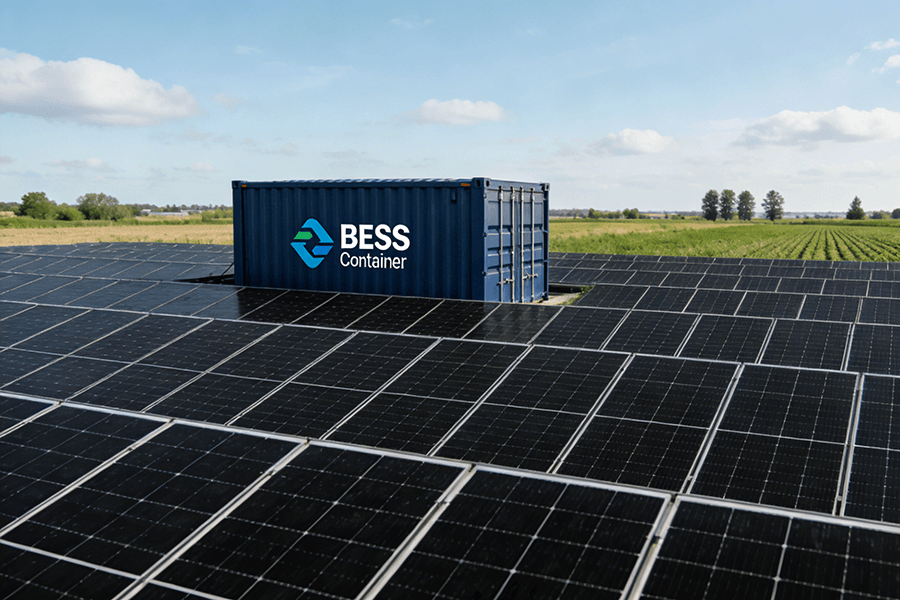
Solar panels on farms are great—until the sun goes down and the irrigation system sputters to a halt. BESS Containers fix that, and then some. Think of them as the farm’s “energy butler”: always on call, prioritizes the important tasks, and saves you money.
Here’s the hard data on their impact—no fluff, just results:
Solar panels on farms are great—until the sun goes down and the irrigation system sputters to a halt. BESS Containers fix that, and then some. Think of them as the farm’s “energy butler”: always on call, prioritizes the important tasks, and saves you money. Here’s the hard data on their impact:
Uninterrupted Power for Critical Farm Gear
A drought is bad enough—add a power outage, and your crops are toast. BESS Containers eliminate that risk with 48+ hours of backup power for critical gear:
-
Irrigation pumps (the #1 energy cost for 60% of EU farms)
-
Greenhouse HVAC (temperature control can make or break a tomato harvest)
-
Robotic milkers (dairy farms can’t pause—cows wait for no one)
Case in point: Enerside’s 360MWp Agri-PV project in Sardinia, paired with an 82.5MWh BESS. It keeps 900 hectares of crops and sheep grazing operations running, even when the grid fails during storms. For greenhouse farmers in Lombardy, that means no more losing 20% of their crop to temperature spikes—your BESS has your back.
Boost Solar Self-Consumption: From 60% to 90%
Most farms waste 40% of their solar power—they generate it midday (when the sun’s blazing) but can’t use it, so it feeds back to the grid for pennies on the euro. BESS Containers store that surplus and release it when the farm needs it most: evening milking, night-time greenhouse heating, or early-morning irrigation.
The result? Self-consumption rates jump from 60% to 90%, and you avoid buying expensive grid power during peak hours (which can hit €0.50/MWh in France and Germany). Let’s do the math for a 1MW Agri-PV system—numbers every farmer will appreciate:
Annual Savings Breakdown (1MW Agri-PV + 3MWh BESS) – Solar generation: ~1,200 MWh/year – Pre-BESS self-consumption: 720 MWh (60%) → buys 480 MWh from grid (@€0.30/MWh: €144,000) – Post-BESS self-consumption: 1,080 MWh (90%) → buys 120 MWh from grid (@€0.30/MWh: €36,000) – Annual Savings: €108,000
Fatten the Bottom Line: €10k+/Hectare in Extra Income
Farming is tough—any extra income stream is gold. BESS-equipped Agri-PV systems don’t just save money; they make money through two key revenue streams:
-
Peak shaving: Sell stored solar power back to the grid during peak demand (prices are 2-3x higher than off-peak)
-
Grid services: Participate in frequency regulation programs (grid operators pay you to keep power supply stable)
A Dutch dairy farm with a 1.5MW Agri-PV + BESS system now earns €60,000/year in energy profits—on top of milk sales. For a 10-hectare farm, that’s €12,000+/year in extra cash—enough to upgrade to a new tractor, hire an extra hand, or take a well-deserved vacation to the Algarve.
This isn’t chump change. For young farmers (rural youth unemployment hits 13.4% in the EU), it’s a way to make farming profitable again.
Built for Farms, Not Data Centers: BESS Container Design Wins
Farms are messy. Dust, mud, extreme temperatures, and the occasional curious sheep—your BESS can’t be a “diva” that needs constant coddling. The best Agri-PV BESS Containers are built like farm tractors: tough, low-maintenance, and designed to blend in.
Here’s the farm-specific tech that matters:
Farms are messy. Dust, mud, extreme temperatures—your BESS can’t be a “diva” that needs constant coddling. The best Agri-PV BESS Containers are built like farm tractors: tough, low-maintenance, and designed to blend in. Here’s the tech that matters:
-
Low-Impact Installation: No digging up fertile soil (the farmer’s most valuable asset). Containers sit on gravel pads, so you can move them if you rotate crops or expand. Enerside’s Sardinia project proved this—900 hectares of farmland stay productive while hosting 360MWp of solar and 82.5MWh of BESS.
-
Field-Ready Durability: IP54 protection rating (dust-tight, water-resistant) handles Spanish heatwaves (45°C+) and German rainstorms. Liquid cooling systems keep batteries at 25-35°C (optimal for lifespan) even when temperatures swing from -30°C to 50°C.
-
Smart Energy Dispatch (No Tech Degree Needed): The BESS’s brain (Battery Management System, BMS) learns your farm’s habits—prioritizing irrigation over grid sales, for example. Maxbo’s BMS even integrates with farm management software, so you can monitor power use from your phone while sipping coffee.
To put this in perspective, here’s how farm-specific BESS containers stack up against generic industrial models:
|
Feature
|
Agri-PV BESS Container
|
Generic Industrial BESS
|
|---|---|---|
|
Protection Rating
|
IP54 (dust/water-resistant)
|
IP20 (only for indoor use)
|
|
Installation
|
Gravel pad (1 day)
|
Concrete foundation (1 week)
|
|
Temperature Range
|
-30°C to 50°C
|
0°C to 40°C
|
|
Farm Software Integration
|
Yes (irrigation, HVAC)
|
No
|
Market Potential: 3GW by 2030—Don’t Miss the Boat
The Big Picture: EU Solar Ambitions
The EU’s 1.04GW 2026 target is just the warm-up. SolarPower Europe estimates the bloc needs 1TW of solar by 2030 to hit its climate goals—and Agri-PV will be a huge part of that.
The European Commission’s Joint Research Centre (JRC) goes further: just 1% of EU farmland could host 944GW of Agri-PV—nearly matching the entire 2030 solar target. For BESS, that means massive demand: we’re projecting 3GW of Agri-PV BESS capacity by 2030, as farmers realize storage is non-negotiable.
The EU’s 1.04GW 2026 target is just the warm-up. The European Commission’s Joint Research Centre (JRC) estimates that 1% of EU farmland could host 944GW of Agri-PV—more than the bloc’s entire 2030 solar goal . For BESS, that means massive demand: we’re projecting 3GW of Agri-PV BESS capacity by 2030, as farmers realize storage is non-negotiable.
Why Demand Will Explode (Beyond Subsidies)
Grid congestion is getting worse—new solar projects in Italy and Spain often face 2+ year connection waits. BESS Containers let farmers go “semi-off-grid,” avoiding those delays and locking in their own power supply.
Add in rising food prices (up 60% between 2020 and 2022) and the need to feed a growing population (8.6 billion by 2030), and Agri-PV + BESS becomes a way to secure both food and energy supplies.
Here’s our 5-year demand forecast for Agri-PV BESS in the EU:
|
Year
|
Agri-PV BESS Demand (GW)
|
Driving Factor
|
|---|---|---|
|
2025
|
0.45
|
EU subsidy rollout
|
|
2026
|
1.04
|
EU 1.04GW target deadline
|
|
2027
|
1.5
|
Grid congestion solutions
|
|
2028
|
2.2
|
Food-energy security focus
|
|
2030
|
3.0+
|
1TW solar target push
|
Hi, We’re Maxbo Solar—Your Agri-PV BESS Partner
Full disclosure: I work at Maxbo Solar, and we’re not just selling BESS Containers—we’re helping farmers navigate this Agri-PV revolution. We started because we noticed a problem: generic BESS providers didn’t understand farms—they’d show up with data center gear and scratch their heads at irrigation pumps.
So we built a team of engineers who know both batteries and barns. Here’s why dozens of European farmers have chosen us (and why you should too):
-
EU-Ready by Design (No Compliance Headaches): Our 2MW/6MWh BESS Containers are certified to IEC 62619, UL 9540A, and NFPA 855—every EU safety standard. We even handle the “Superbonus” paperwork (we know it’s a headache) to make sure you get your tax credits on time. No more chasing accountants or bureaucrats.
-
Farm-Focused Support: Our engineers don’t just know batteries—they know farms. Marco, our lead engineer, grew up on a vineyard in Tuscany. He’ll visit your land, assess your irrigation and heating needs, and design a system that fits your workflow (not the other way around). One Dutch dairy farmer told us, “You guys speak my language—no jargon, just solutions.”
-
Proven Results (50+ Projects and Counting): We’ve deployed across Italy, Spain, and the Netherlands—including the 10-hectare Emilia-Romagna farm that’s saving €12,000/year. Our systems have a 99.2% uptime rate—because your farm doesn’t take days off, and neither should your power.
-
Transparent Pricing (No Hidden Fees): We give you a fixed quote that includes installation, maintenance, and even software updates for 5 years. You’ll know exactly what you’re paying—and exactly how much you’ll save. No “surprise” charges for farm-specific tweaks.
Want to see our BESS Containers in action? Visit our website at www.maxbo-solar.com to watch case study videos (including Giovanni’s farm in Emilia-Romagna) or request a free farm assessment. We’ll even bring a sample BESS Container to your field—so you can kick the tires (metaphorically, of course; it’s heavy) and ask Marco all your questions over a coffee (or a glass of wine, if you’re in Tuscany).


Final Thought: The Sun Is Shining—Grab the Subsidy
2026 is closer than you think. The EU’s 1.04GW target and Italy’s Superbonus won’t last forever—these subsidies are designed to jumpstart the market, not fund it forever.
Agri-PV BESS Containers aren’t just a way to get free money from subsidies—they’re a way to future-proof your farm. You’ll grow crops, generate power, and sleep easy knowing your irrigation system won’t fail when the sun hides or the grid goes down.
So what are you waiting for? The sun’s free—let’s turn it into profit. And if you need help navigating the chaos of subsidies, design, or paperwork? We’re right here with you.