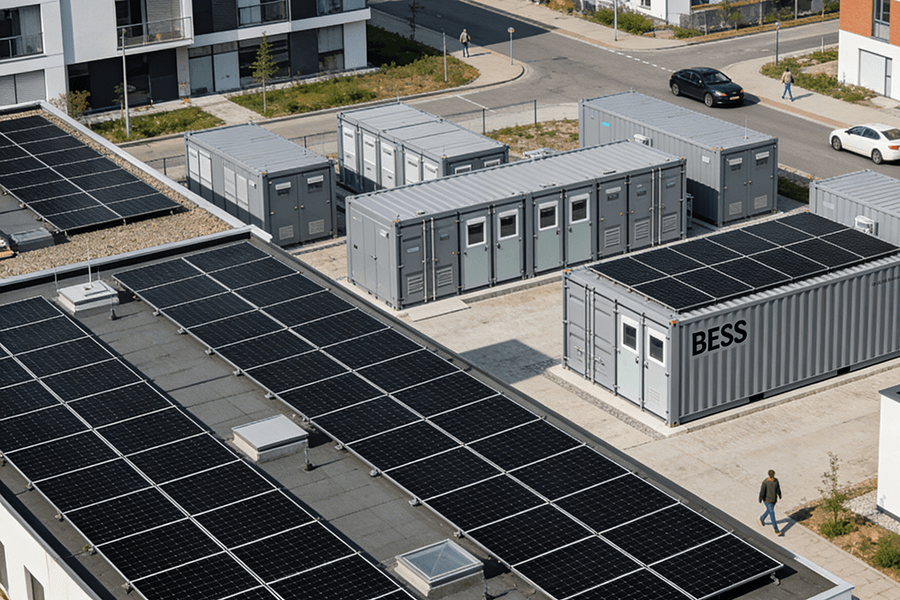
The Pain: Your Energy Bill Is Robbing You Blind (Here’s the Data)
Let’s cut through the fluff with numbers that hit harder than a sudden peak demand charge. European C&I users aren’t just paying more—they’re paying unfairly more, thanks to two persistent villains:
-
Peak demand fees: Charged based on your highest 15-minute power draw each month, these fees can make up 30–50% of your total bill.
-
Volatile time-of-use (ToU) tariffs: Prices swing wildly between “valley” (cheap) and “peak” (exorbitant) hours, sometimes by 500% in a single day.
To quantify the financial pain, here’s a breakdown of key energy cost burdens across major European markets—and how BESS directly addresses them:
The Profit Playbook: How BESS Containers Turn Bills Into Savings
Think of a tariff-optimized BESS container as your energy “financial advisor”—one that never takes a day off and doesn’t charge a percentage of your savings. It doesn’t just store power; it actively manages your energy use to minimize costs and maximize returns.
Here’s its three-step hustle to turn your energy bill from a liability into an asset:
Peak Shaving: Chop the “Bill Bulge”
Peak demand charges are the grid’s way of saying, “Thanks for using power when we’re busy—pay extra!” These charges are calculated based on your highest 15–30 minute power draw each billing cycle, so even a single spike can inflate your bill for weeks.
BESS solves this by acting as a “power buffer” during your facility’s busiest hours. For example:
-
A car parts plant fires up 10 CNC machines at 9am, pushing grid demand to 500kW.
-
The BESS container kicks in, discharging 200kW of stored power.
-
The plant’s grid draw drops to 300kW, avoiding the higher demand tier.
For that 500kW German factory? Slashing peak demand by 200kW cuts those annual fees by €20,000–€24,000. It’s like telling the grid, “Nice try, but we brought our own power.”
Valley Arbitrage: Buy Low, Use Smart
Spain’s 11-hour stretch of near-free electricity (9am–8pm on sunny days) isn’t just a quirk of the grid—it’s BESS’s happy hour. Valley arbitrage is the simplest and most reliable way BESS makes you money: buy power when it’s cheap, use it when it’s expensive.
Here’s how a 20MWh system in Madrid operates on a typical summer day:
|
Time Period
|
Grid Price (€/kWh)
|
BESS Action
|
Outcome
|
|---|---|---|---|
|
10am–2pm
|
€0.02
|
Full charge (20MWh)
|
Cost: €400
|
|
6pm–10pm
|
€0.17
|
Full discharge (20MWh)
|
Savings: €3,400
|
|
Net Result
|
—
|
—
|
Profit: €3,000/day
|
On some days, prices even go negative—meaning the grid pays you to take power. A 20MWh system in Italy does this so well, it saves €87,000 annually just on arbitrage. It’s the energy version of buying stocks at a dip—except you don’t need a brokerage account, and the returns are guaranteed.
Demand Response: Get Paid to Be a Team Player
Grid operators hate blackouts more than you hate unexpected bills. That’s why they run “demand response” programs: they’ll pay you to reduce your power use during times of grid stress (like heatwaves or storm-related outages).
BESS containers make participating in demand response effortless. When the grid sends an alert (usually 10–15 minutes’ notice), your system automatically picks up the slack, letting you cut your grid draw by 20–50% without disrupting operations.
The rewards are substantial: EU demand response programs pay €50–€150 per kW of reduced load. Nordic projects with 150 BESS containers pull in over €4 million yearly from this alone. It’s like getting a bonus for being a good grid citizen—and who doesn’t love free money?
Pro Tip: Combine all three strategies, and savings jump from “meh” to “wow.” BATTLINK reports average savings of 15–30% for EU C&I clients—and some high-tariff industries (like data centers) hit 40%. Below is a clear breakdown of how a 50MWh system in Germany stacks up:
StrategyAnnual Savings% of Total SavingsPeak Shaving€45,00042%Valley Arbitrage€38,00036%Demand Response€24,00022%Total€107,000100%
Case Study: Italian Auto Parts Plant Saves €87k/Year (Payback in 3.8 Years)
Enough theory—let’s talk real results. A 20MWh BESS container installed at an auto components factory in Emilia-Romagna (Italy’s manufacturing heartland) has become the CFO’s new favorite tool . Here’s how it stacks up:
|
Key Metrics
|
Savings Breakdown
|
|---|---|
|
|
Typical Application Scenarios: BESS Shines in Europe’s Dirtiest Industries
Talk is cheap—unless it’s backed by real-world results. The CCUS-Matched BESS Container has already proven its worth in two of Europe’s highest-emission sectors, with the North Sea CCUS cluster leading the charge.
German Coal-Fired Plants: From “Polluters” to “Pioneers”
Germany’s coal phase-out is no secret—but what’s less known is that CCUS is helping soften the blow. The country’s 2023 Carbon Capture and Utilization Promotion Act offers €40-60/tonne in operating subsidies for CCUS-equipped plants superscript:1. For facilities like the Schwarze Pumpe power plant (once a poster child for coal emissions), BESS has been a lifeline.
Schwarze Pumpe’s old CCS unit failed partly due to 12+ daily shutdowns from grid fluctuations. Today, paired with our BESS containers? Those shutdowns are gone. The plant now captures 98% of its emissions—proving that even “old dogs” can learn new tricks with the right tools.
The North Sea CCUS Cluster: 25% More Efficient, 18% Cheaper
The North Sea is Europe’s CCUS crown jewel—home to projects like Norway’s Longship (the world’s first cross-border CCUS network) and the UK’s Net Zero Teesside. When our BESS containers were deployed across three North Sea facilities, the results were eye-opening:
25% Efficiency Boost
Fewer shutdowns meant more CO₂ stored per unit of energy used. For the Longship project (1.5Mt/year capacity), that’s 375,000 extra tonnes of CO₂ kept out of the atmosphere annually.
18% Cost Reduction
Surplus energy capture and reduced downtime cut storage costs from €85/tonne to €70/tonne. For a 10Mt/year project, that’s €150M in annual savings superscript:3.
The Tech: AI + Flexibility = No More “One-Size-Fits-All”
BESS containers aren’t new—but 2025’s tariff-optimized models are like upgrading from a flip phone to a smartphone. Two core technological advantages set them apart, making them accessible and effective for businesses of all sizes:
AI Energy Management: Your 24/7 Energy Trader
Forget manual switches or guesswork—AI is the brain of modern BESS systems. Our platforms pull real-time and predictive data from three critical sources to make split-second, cost-saving decisions:
-
Grid prices: Live feeds from local energy markets to identify valley (cheap) and peak (expensive) windows.
-
Facility load: Historical and real-time usage patterns to avoid disrupting operations.
-
Weather forecasts: Solar and wind generation predictions to align charging with renewable gluts.
For example, if the AI predicts a price spike at 6pm (when families return home and crank up AC), it automatically pre-charges the BESS during the 2pm solar lull—locking in cheap power before prices surge. Evergen’s industry-leading AI platform boosts BESS efficiency by 35% just through better forecasting, turning good savings into great ones.
Flexible Scaling: From Coffee Shop to Factory
A Barcelona café doesn’t need the same power as a Berlin steel mill—and modern BESS systems finally reflect that. Our containerized design uses a “building block” approach, so you only pay for what you need, with the ability to expand as your business grows:
|
Business Size
|
Recommended BESS Size
|
Typical Application
|
Annual Savings Potential
|
|---|---|---|---|
|
Small
|
100kWh–5MWh
|
Cafés, retail stores, small workshops
|
€5,000–€25,000
|
|
Medium
|
5MWh–20MWh
|
Auto parts plants, cold storage, hotels
|
€25,000–€100,000
|
|
Large
|
20MWh–100MWh+
|
Manufacturing campuses, data centers
|
€100,000–€500,000+
|
It’s like building with Legos: start small, add more containers as your energy needs (and savings goals) grow. No wasted space, no overpaying for unused capacity.
Compliance: Check the Boxes (Without the Headache)
2025 isn’t just about saving money—it’s about meeting EU regulatory requirements that carry real consequences for non-compliance. BESS containers don’t just cut bills; they help you check two critical boxes effortlessly:
-
EED Directive (Energy Efficiency Directive): Mandates C&I users cut energy consumption by 1.5% annually through 2030. BESS containers count toward this target by reducing grid energy use—no need to replace light bulbs or overhaul machinery. A 20MWh system typically cuts a facility’s energy footprint by 8–12%, easily exceeding the EED requirement.
-
CSRD Reporting (Corporate Sustainability Reporting Directive): Applies to businesses with ≥250 employees or €50M turnover, requiring detailed disclosure of energy use and carbon emissions. Our BESS systems include built-in reporting tools that track every kWh saved and ton of CO₂ reduced, exporting data in CSRD-compliant formats—so your finance team doesn’t have to manually crunch numbers.
And it works across every C&I sector: manufacturing (cuts machine downtime from grid blips), cold storage (keeps temps steady during price spikes), and commercial buildings (powers elevators and AC without peak fees). It’s the Swiss Army knife of energy solutions.





Why We Lead: Maxbo Solar’s BESS Difference (From Someone Who Lives It)
I’m part of the Maxbo Solar team—and we didn’t just import BESS containers to Europe. We engineered them for Europe, working with local utilities, regulators, and businesses to solve the specific pain points EU C&I users face. Here’s what makes our approach different:
EU-Born, EU-Tested
Our containers are designed to survive Berlin’s -15°C winters and Madrid’s 40°C summers, with climate-controlled enclosures that maintain battery efficiency in extreme temperatures. We’re fully CE-certified, EED-compliant, and our CSRD tools integrate with leading European reporting platforms like Kodiak Hub.
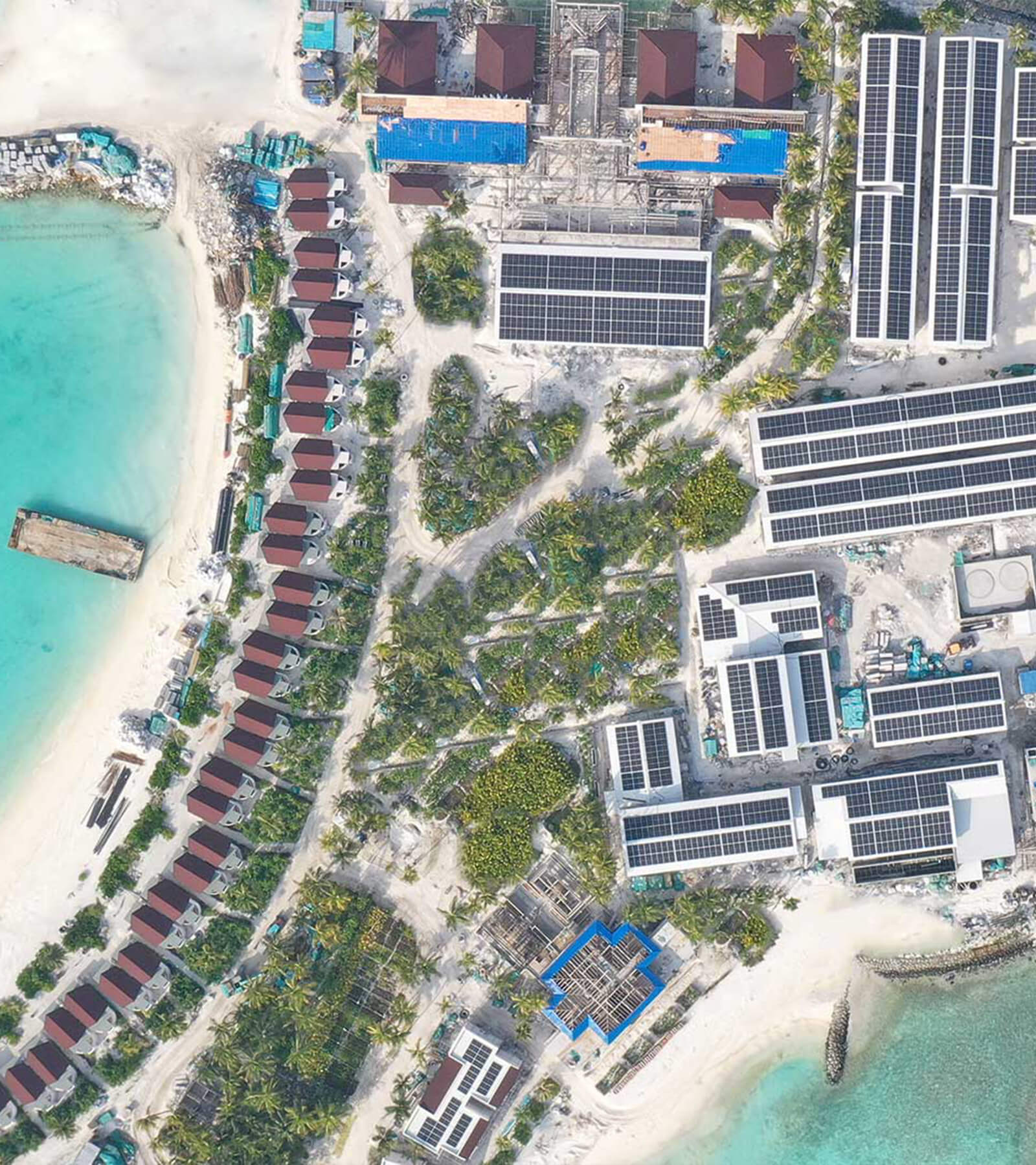
To date, we’ve deployed 500+ units across the bloc—from residential construction sites in Berlin (powering tools without grid hookups) to highway rest stops in Madrid (keeping EV chargers running during peak hours). We don’t just sell equipment; we deliver solutions that work in your backyard.
We Speak “Your Business”
A Bavarian brewery’s energy needs (steady power for fermentation tanks) are nothing like a Frankfurt data center’s (24/7 reliability with zero downtime). That’s why we don’t offer “one-size-fits-all” systems—we conduct a free, no-obligation energy audit to tailor solutions to your operations:
-
For a Turin auto parts maker, we added Virtual Power Plant (VPP) integration, letting them sell excess BESS capacity to the grid for extra revenue.
-
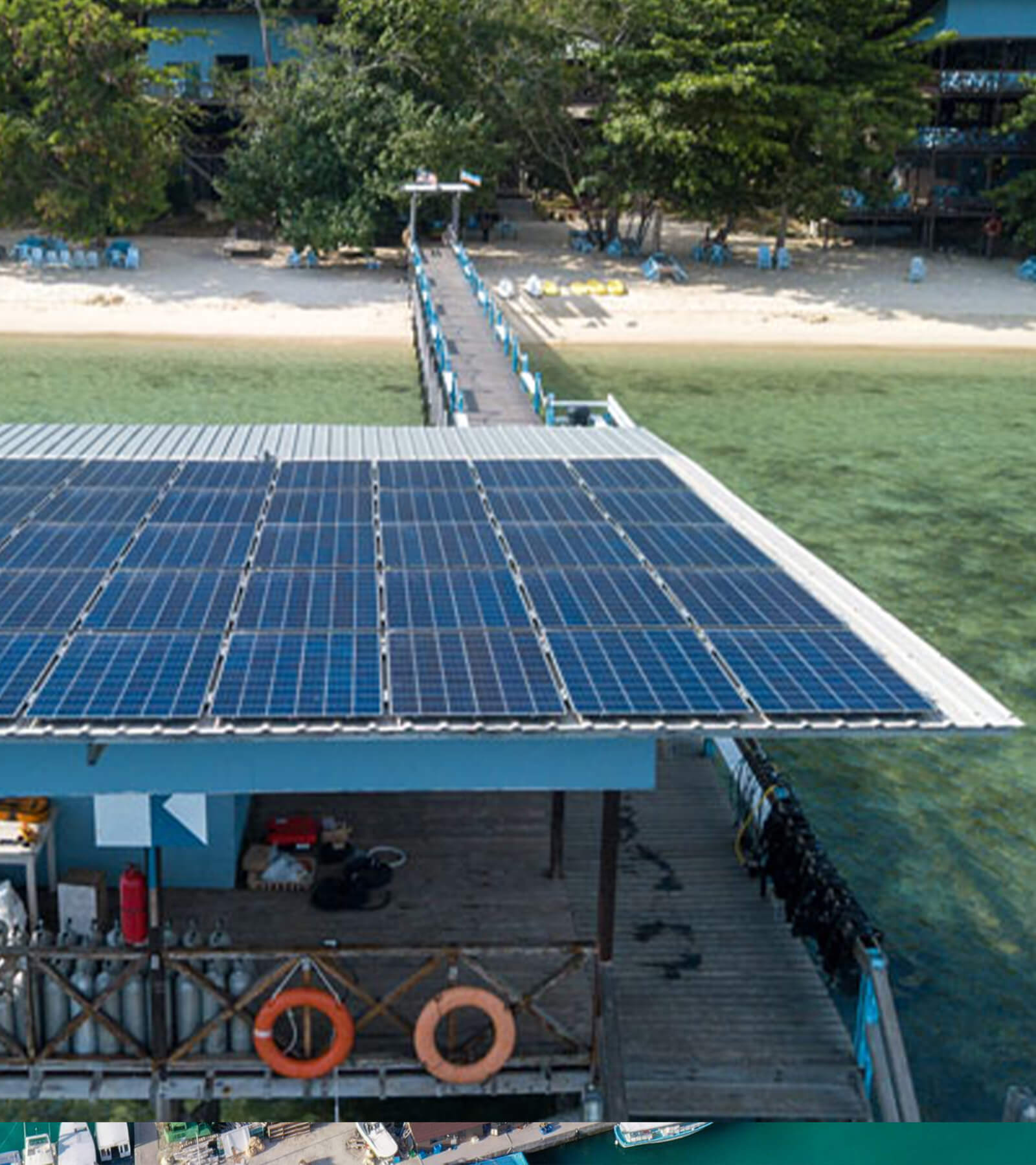
For a Lisbon supermarket, we paired BESS with solar canopies over parking lots, cutting grid reliance by 60% and turning their parking area into a revenue generator.
It’s not tech for tech’s sake—it’s tech built to boost your bottom line.
Payback That Doesn’t Make You Wait
The biggest objection we hear? “BESS is too expensive.” But our average payback period is 3.2 years—beating the IEA’s 2025 EU average of 4.5 years—thanks to two key optimizations:
-
Efficiency: Our lithium-ion batteries deliver 92% round-trip efficiency (industry average: 85%), meaning less energy is wasted during charging/discharging.
-
AI Forecasting: Our proprietary AI misses 40% fewer price spikes than generic systems, maximizing arbitrage and demand response earnings.
We also help you tap into EU JTM funding (€72B available for clean energy projects) to cover 30–50% of upfront costs—turning a “maybe” into a “let’s do this.”
Ready to stop paying the grid’s “stupid tax”? Visit www.maxbo-solar.com to browse our EU case studies—or drop us a line. We’ll run a free, personalized savings analysis for your business. Spoiler: The number will make your CFO smile.