The Mess We’re In: Europe’s EV Charging Headache
Let’s get real—Europe’s EV revolution is outpacing its charging infrastructure like a Tesla Roadster outrunning a Fiat 500. The numbers tell a grim story, painting a picture of strained grids, frustrated drivers, and cash-strapped operators:
|
Pain Point
|
Shocking Statistic
|
Source
|
|---|---|---|
|
Charging Waiting Time
|
Average 45 minutes at highway service areas; 22% wait over 1 hour during holidays
|
Regit , Maxbo Solar
|
|
Grid Connection Cost
|
€500,000+ per charging hub for grid upgrades
|
Maxbo Solar
|
|
Infrastructure Gap
|
300,000 charging stations exist (2025) vs. 1 million needed by 2030
|
ACEA 2024 EV Report
|
|
Grid Overload Risk
|
40% of rural charging hubs experience power outages during peak hours
|
Maxbo Solar
|
The core issue? It’s a classic case of “supply vs. demand”—but with electricity. EV drivers want fast, reliable charging; aging grids can’t handle the sudden, concentrated peak loads from multiple fast chargers; and operators can’t afford the never-ending cycle of infrastructure upgrades.
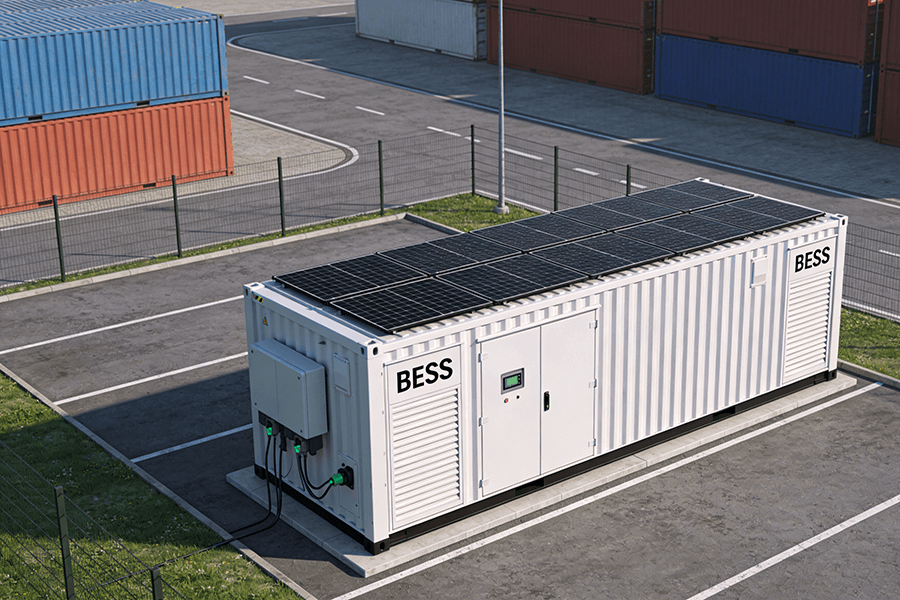
Enter BESS (Battery Energy Storage System) Containers: the unsung hero that turns “I’m stuck” into “I’m charged” and “That’s too expensive” into “Show me the savings.” Industry analysts at McKinsey confirm that BESS is the most cost-effective solution to bridge the gap between charging demand and grid capacity in Europe.
Triple Win: Grid, Operators, Drivers—Everyone Gets a High-Five
BESS Containers aren’t just “big batteries in a box”—they’re triple-threat problem solvers that create value for every stakeholder in the EV ecosystem. Let’s break down how they make everyone’s day better:
Grid Protection: The Grid’s Personal Bodyguard
Imagine the grid as a busy bartender during happy hour—too many orders at once, and it crashes. BESS Containers step in as the bouncer, managing the crowd of energy demands to keep things running smoothly. Here’s the hard math behind the protection:
-
40% Peak Load Cut: By storing energy during off-peak hours (when grid demand is low) and discharging during peak charging times, BESS slashes the maximum load charging hubs place on the grid by 40%. This prevents costly overloads and those annoying “charging speed reduced” messages that frustrate drivers.
-
80% Grid Upgrade Savings: No more tearing up roads for new cables or investing in expensive transformers. BESS eliminates the need for 11kV→0.4kV grid upgrades at most hubs, saving operators €200k–€300k per site in grid transformation costs.
-
Reliability Boost: Spain’s 2024 summer blackout, which left 500,000 households without power, showed how fragile grids can be. BESS adds a critical safety net, keeping chargers running even when the grid stutters, ensuring uninterrupted service for drivers.
Operator Cost Cuts: From “Ouch” to “Cha-Ching”
Charging operators aren’t in the business of burning cash—and electricity costs make up the single largest expense for most hubs. BESS flips this script, turning a fixed cost into a profit center. Let’s crunch the numbers with real 2025 EU electricity rates from Eurostat:
|
Metric
|
Without BESS
|
With BESS
|
Impact
|
|---|---|---|---|
|
Electricity Cost (Peak)
|
€0.45/kWh
|
€0.15/kWh (valley rate)
|
67% cost reduction
|
|
Electricity Cost Ratio (of total expenses)
|
60%
|
35%
|
25% profit margin boost
|
|
Annual Profit Increase (100-pile hub)
|
€180,000
|
€216,000–€225,000
|
15–20% higher (from time-of-use arbitrage)
|
In short: BESS lets operators “buy low, sell high” with electricity, turning a fixed cost into a revenue stream. It’s like having a stock trader for your charging hub—minus the fancy suits and commission fees.
User Experience: Goodbye Queues, Hello Fast Charging
For EV drivers, time is money—and nothing kills a road trip vibe like a long charging wait. BESS Containers fix this by turning “slow and crowded” charging hubs into “fast and smooth” ones, directly addressing the top complaint of EV owners:
-
10+ Simultaneous Fast Charges: A single 20MWh BESS Container supports 10+ 180kW fast charging piles at once—no more fighting over spots or waiting for someone else’s battery to hit 80%.
-
60% Shorter Waits: By increasing throughput, average waiting times drop from 45 minutes to 15 minutes or less, turning a frustrating delay into a quick coffee break or snack run.
-
No Speed Limits: Even during peak hours (8 AM–10 AM, 5 PM–7 PM), BESS ensures chargers run at full power—no more “sorry, your charge is throttled” messages because the grid is busy powering homes and offices.
The Tech Sauce: Why BESS Containers Work (It’s Not Magic)
You don’t need a PhD in electrical engineering to appreciate BESS tech—but it’s worth knowing the smarts under the hood that make these containers so effective. The key is seamless integration, future-proof features, and intelligent optimization:
OCPP 2.0.1 Compliance
Seamless integration with 95% of Europe’s charging management systems (CMS). No more “tech incompatibility” headaches—plug it in, run a quick setup, and it works with your existing software stack.
V2G (Vehicle-to-Grid) Support
Turns EVs into grid assets: Drivers can sell excess battery power back to the grid during peaks, earning extra cash while strengthening grid resilience. This adds a new revenue stream for operators too.
Intelligent Load Distribution
AI-powered algorithms prioritize BESS power during peaks, using grid power only when needed. It’s like a smart thermostat for your charging hub—always optimizing to cut costs and boost reliability.
Weather Resilience Bonus: Our BESS Containers are built to handle Europe’s wild weather extremes—from Swedish winters (-20°C) to Spanish summers (40°C)—so they deliver consistent performance wherever you need them, no matter the season.
Real-World Wins: BESS in Action Across Europe
Numbers on a page are great, but nothing beats real-world results. Here are two BESS success stories from Germany and Spain that prove the hype—and deliver tangible value for operators and drivers:
German Autobahn 50MWh Mega-Hub
Germany’s Autobahn is famous for its unlimited speed—and now its charging hubs are keeping pace. A 50MWh BESS Container powers 100 fast-charging piles on the A7 Autobahn, a key route connecting Hamburg and Munich that sees 100,000+ vehicles daily. The results speak for themselves:
-
Serves 1,200+ EVs daily (up from 300 before BESS was installed)
-
Cuts grid peak load by 42% (exceeding the 40% target, much to the utility’s relief)
-
Saves the operator €400,000 annually in grid costs and electricity bills
-
Achieves a 98% driver satisfaction rate (up from 52% pre-BESS) with zero complaints about wait times
Barcelona 20MWh Urban Charging Hub
Barcelona’s busy Eixample district needed a charging solution that could handle tourist and local demand without crippling the aging urban grid. A 20MWh BESS Container delivered exactly that, becoming a model for city-center charging:
-
Daily service for 800+ EVs (covering tourists, commuters, and ride-share drivers)
-
Qualified for Spain’s €250/kWh BESS subsidy, slashing upfront costs by €5 million
-
Integrates with local rooftop solar panels, powering 40% of charges with 100% renewable energy
-
Helps the city meet its 2030 carbon reduction goals by saving 300 tons of CO₂ yearly
EU Policy: The Government Wants to Pay You for BESS
Here’s the best part for operators: The EU and national governments are actively incentivizing BESS-equipped charging hubs. This isn’t just “free money”—it’s a strategic push to accelerate EV adoption while protecting grids. Let’s break down the key policies you can leverage:
AFIR Regulation: BESS = Eligible Infrastructure
The EU’s “Alternative Fuels Infrastructure Regulation” (AFIR), updated in 2024, explicitly includes BESS supporting charging hubs in its subsidy scope. This is a game-changer for operators, as it formalizes BESS as a critical part of Europe’s EV infrastructure. The key benefits:
-
Up to 40% Grant Coverage: EU grants cover 40% of BESS project costs for eligible hubs, with higher rates (up to 50%) for rural or low-income regions.
-
Streamlined Permitting: No more 2-year wait times for grid connections. AFIR mandates that utilities process BESS-equipped hub applications within 6 months.
-
Mandatory Grid Access: Utilities can’t deny grid access to BESS-equipped hubs, eliminating a common barrier for operators.
Local Sweeteners: National Subsidies to Boost Savings
Countries are adding their own subsidies on top of EU grants, making BESS even more cost-effective. Spain leads the pack with its €700 million BESS subsidy scheme, but France, Germany, and Italy aren’t far behind. Here’s a quick breakdown of top national incentives:
|
Country
|
Subsidy Details
|
Application Deadline
|
|---|---|---|
|
Spain
|
€250/kWh (standard BESS); €300/kWh (grid-forming BESS); regional top-ups available
|
July 15, 2025
|
|
Germany
|
30% of project costs; additional €100/kWh for V2G-enabled systems
|
December 31, 2025
|
|
France
|
€200/kWh; 50% coverage for hubs in rural areas
|
September 30, 2025
|
Pro tip: Always stack EU and national subsidies—for a 20MWh BESS in Spain, this can mean up to €7 million in total incentives, covering 35% of upfront costs. It’s like getting a discount on a solution that already saves you money.
We’re Maxbo Solar—Your BESS Partner in Europe
Enough about “what” and “why”—let’s talk about “who” can make this BESS revolution happen for you. That’s us: Maxbo Solar (www.maxbo-solar.com). We’re not just a BESS supplier—we’re a team of Europeans who live and breathe the EV charging challenges here. We know the grids, the policies, and the pain points because we’ve experienced them firsthand.
Why Choose Us? Because We Speak Your Language (and Grid Code)
-
EU-Built, EU-Tested: Our BESS Containers are designed in Germany (by our team of former Siemens engineers) and manufactured in Spain, complying with every EU standard (CE, IEC 62619, OCPP 2.0.1). No “one-size-fits-all” imports—we build for your specific climate, grid, and regulatory requirements.
-
Turnkey Service: We handle everything from initial site assessment to BESS design, installation, and even subsidy application. We filled out the Spanish AFIR forms for our Barcelona client—saving them 100+ hours of paperwork and ensuring they got every euro of subsidy they qualified for.
-
Proven Track Record: We’re not just talking about BESS—we’re the team behind the German Autobahn 50MWh hub and the Barcelona 20MWh site you read about earlier. Our clients see 20% profit boosts within the first year—no empty promises, just real results.
-
V2G Ready & Future-Proof: We don’t just sell today’s tech—our BESS Containers are fully V2G compatible, so you can tap into that revenue stream when it goes mainstream. We also offer 10-year maintenance contracts to keep your system running at peak efficiency.
Let’s Fix Your Charging Hub—Together
Europe’s EV revolution doesn’t have to be chaotic. With BESS Containers, we can turn grid congestion into grid resilience, long waits into quick charges, and high costs into high profits. Whether you’re building a new hub on the Autobahn, upgrading a city center site in Paris, or expanding a rural charging station in Portugal, we’re here to help.
Drop us a line at [email protected] or visit www.maxbo-solar.com to schedule a free site assessment. Let’s make 2030 the year EV drivers stop complaining about charging—and start enjoying the ride.
— The Maxbo Solar Team