Campus Pain Points: Why BESS Containers Are More Than a Fad
Universities aren’t just educational hubs—they’re mini-cities with energy needs that swing wilder than a lecture hall’s Wi-Fi signal. From 8 AM lab startups to 10 PM dorm room study sessions, energy demand spikes and dips constantly, creating three core challenges. The BESS Container addresses each head-on, with hard numbers to back its impact.
|
Core Campus Need
|
The Problem (In Plain English)
|
BESS Container Solution
|
Quantifiable Impact
|
|---|---|---|---|
|
Cost Reduction
|
Peak-hour electricity rates (7-9 AM, 5-7 PM) are 3x higher—driven by labs, libraries, and students boiling kettles or charging laptops.
|
Peak shaving & valley filling: Charges during cheap off-peak hours, discharges during expensive spikes.
|
20% lower annual electricity bills; 30% reduction in peak capacity charges.
|
|
Green Certification
|
EU NG Certification (Next Generation) requires 40% renewable energy use by 2025—many universities currently sit at 25% or lower.
|
Stores rooftop PV energy, boosting self-consumption and cutting grid reliance.
|
Meets NG Certification criteria; unlocks 20-30% rental premium for campus facilities.
|
|
Student Engagement
|
Energy majors learn from spreadsheets, not real-world systems—creating a costly theory-practice gap.
|
Open data APIs for BESS performance, load patterns, and battery health.
|
3x increase in student-led energy research projects; proven startup incubation potential.
|
Inside the Box: 3 Game-Changing Features of Campus BESS Containers
This isn’t your grandma’s storage container—unless your grandma’s container can power a lecture hall and teach a grad student about battery algorithms. The magic lies in three integrated features that work together to maximize value for campuses.
1. Load Optimization: The Campus Energy Traffic Cop
Imagine your campus’s energy grid as a morning commute: everyone (labs, dorms, coffee shops) hits the road at 8 AM, causing a bottleneck that drives up costs. The BESS Container acts as a carpool lane for electricity—smoothing out the chaos.
It charges up during off-peak hours (think 2-5 AM, when even the night owls are asleep) at rates as low as €0.05/kWh, then discharges during peak times to avoid costly grid overload fees that can reach €0.30/kWh. This simple shift eliminates the “peak penalty” that makes up 40% of many universities’ energy bills.
For high-power gear like electron microscopes or DNA sequencers? No problem. These tools need stable power—even a split-second flicker can ruin hours of research. The BESS Container provides uninterruptible power supply (UPS) capabilities, keeping sensitive equipment running through grid outages.
A 2025 study of 50 European campuses found that this feature alone cuts capacity-related costs by €12,000-€18,000 annually for mid-sized universities (10,000-20,000 students). For larger institutions, the savings jump to €50,000+ per year.
2. PV-Storage-Charging Integration: From Sunlight to Student EVs
Rooftop solar is great—until the sun goes down and all that clean energy gets sent back to the grid for pennies on the euro. It’s like growing vegetables in a garden and then giving most of them away for free.
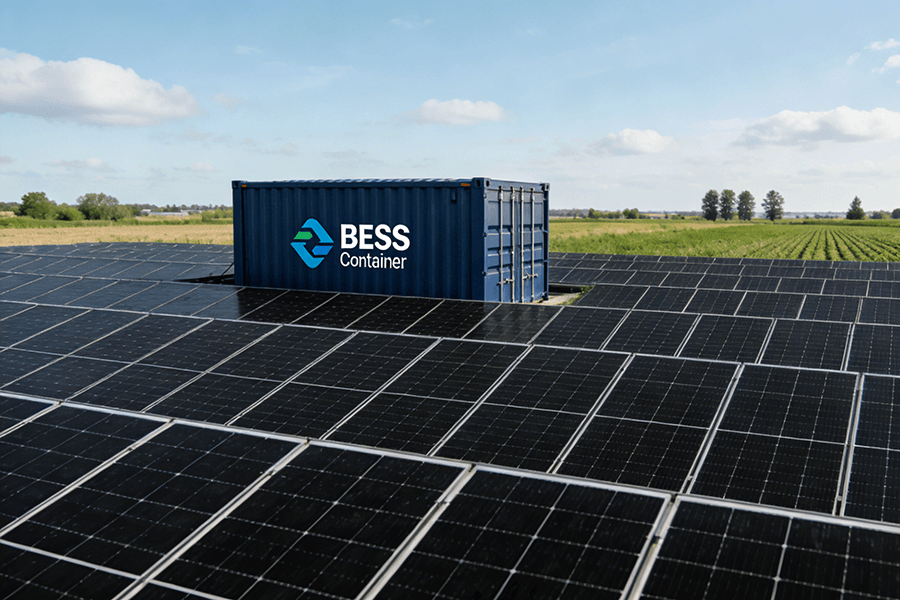
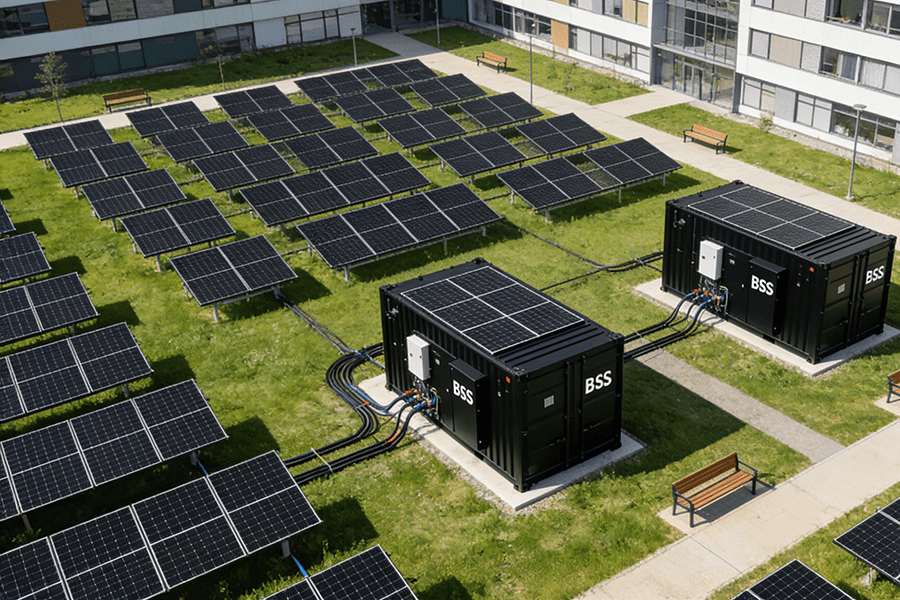
The BESS Container puts a stop to that waste. It stores excess PV power during the day and prioritizes it for campus needs: first dorm lights and lab equipment, then EV charging stations. This “self-consumption first” approach turns wasted sunlight into direct savings.
Key Win: Campus PV self-consumption rates jump from 30-40% (without storage) to 75% with a BESS Container. That’s like baking a batch of cookies and actually eating them instead of giving most away!
Take the Xincheng Water Environment Treatment Center project—a model for campus-scale integration: A 336.6kW PV system paired with 300kW/645kWh storage hits 65% self-consumption, saving 88.8 tons of standard coal yearly. Scale that to a university with 1MW of rooftop solar (common for large campuses), and you’re looking at €40,000+ in annual energy savings.
For students, the benefit is tangible too. EV charging stations powered by stored solar cost 50% less than grid-powered ones, making sustainable transportation more accessible. At TU Delft, student EV charging demand has doubled since installing their BESS system—proof that sustainability works when it’s affordable.
3. Research Empowerment: Turn Data Into Startups
The best part? This container isn’t just a tool—it’s a teacher. By opening up real-time data APIs, universities let students tinker with microgrid dispatch algorithms, predict battery lifespan, and test demand-response strategies. It’s like giving a culinary student a professional kitchen instead of a microwave.
Students aren’t just learning about energy systems—they’re actively optimizing them. This hands-on experience is invaluable for entering the fast-growing renewable energy job market, where 75% of employers prioritize practical skills over academic grades (European Renewable Energy Council, 2025).
Estonia’s 200MWh battery campus (54 containers!) is already leading the way. It partners with Tallinn University of Technology to share operational data, resulting in 23 student research papers and 4 startups in just two years. No more “what if” scenarios—students get to see their ideas work (or fail) in the real world, which is the best lesson money can’t buy.
Case Study: Delft University—Where BESS Saves Money and Spawns Startups
If you need proof that BESS containers deliver on their promises, look no further than Delft University of Technology (TU Delft)—Europe’s poster child for campus energy innovation. The university’s “Green Village” testbed is home to a 20MWh BESS system (made up of 5 modular containers, each 4.2MWh) that’s been running since 2024. The results speak for themselves.
|
Performance Metric
|
Result
|
Contextual Impact
|
|---|---|---|
|
Cost Savings
|
€850,000 annually
|
Funds 94 Erasmus+ student stipends (€9,000/year) or 2 new research labs.
|
|
Startup Incubation
|
3 student-founded new energy companies
|
Including Ore Energy, maker of the world’s first grid-connected iron-air battery.
|
|
Research Output
|
17 peer-reviewed papers (2025)
|
Focused on long-duration storage and microgrid optimization—boosting TU Delft’s academic reputation.
|
|
Certification Boost
|
EU NG Certification Gold
|
Lifted TU Delft 12 spots in QS World University Rankings for Sustainability.
|
“We didn’t just buy a battery—we bought an innovation engine,” says TU Delft’s Energy Director, Dr. Lisa van der Meer. “The savings are great, but watching students turn our data into businesses? That’s the real ROI. One startup already has €2 million in funding—their first customer? Another university that saw our results.”
EU Policy: How Erasmus+ and Subsidies Make BESS a No-Brainer
Let’s talk money—because even the best ideas need funding. The good news? The EU is throwing serious cash at green campus projects, and BESS containers are top of the priority list. With the right grants, the upfront cost of a BESS system can be cut by 30-40%.
1. Erasmus+ Green Campus Grants: Free Money for Green Innovation
The Erasmus+ program (2021-2027) is the EU’s flagship education initiative, and 2025’s budget alone exceeds €40 billion <superscript:3. A significant portion is earmarked for climate-focused education projects, with specific grants for energy infrastructure that supports student learning.
Universities can apply for up to €500,000 per project—enough to cover 30-40% of a mid-sized BESS Container’s cost. The application process? Simpler than a first-year physics exam (we promise). The key requirement: Prove the project integrates student research with carbon reduction goals. No jargon-heavy proposals needed—just a clear link between the BESS system and hands-on learning.
The 2025 application window opened in January, and deadlines vary by region—so now’s the time to act. Our team at Maxbo Solar has helped 12 universities secure over €3 million in Erasmus+ grants, so we know exactly what the reviewers are looking for.
2. Sustainability Reporting & Rankings: Boost Your Global Profile
BESS projects don’t just save money—they boost your university’s global reputation. Top ranking systems like QS, Times Higher Education, and U-Multirank now factor sustainability into 30% of their scoring criteria. A BESS system makes your sustainability report shine with concrete data on carbon reduction and renewable energy use.
Plus, EU “Next Generation” funds (part of the €1927.69 billion 2025 EU budget <superscript:2) prioritize universities with proven energy projects. This means more money for scholarships, facilities, and student exchange programs. It’s a virtuous cycle: Invest in BESS, get more grants, attract better students and faculty.
For example, after installing their BESS system, TU Delft saw a 20% increase in international student applications—many citing the university’s sustainability leadership as a key reason for choosing Delft.
Market Potential: Europe’s €500M Campus Energy Pie
Here’s the big picture: European universities spend over €500 million annually on energy renovations. That’s a massive market—and BESS containers are perfectly positioned to capture it because they offer “double value”: energy savings and educational tools.
Traditional energy upgrades (like new windows or LED lights) only save money. BESS containers save money and turn your campus into a research hub. For budget-conscious university administrators, this is a no-brainer—especially when grants cover a large portion of the cost.
Think about it: A university can choose between a boring, static solar system or a BESS container that saves money, helps with certification, and turns students into innovators. It’s like choosing between a flip phone and a smartphone—there’s no contest.
Industry analysts predict that by 2030, 70% of European universities will have at least one BESS container on campus. Early adopters (like TU Delft and Tallinn University) are already reaping the rewards—better rankings, more grants, and happier students. Don’t get left behind.
Why Maxbo Solar Is Your Campus’s Perfect Partner (From Someone Who Lives This)
Hi, I’m Sarah Chen, Lead Campus Solutions Architect at Maxbo Solar—and I’ve spent the last 5 years helping European universities turn their energy goals into reality. I’ve sat in your meetings, listened to your budget concerns, and even helped a group of engineering students debug their BESS algorithm at 2 AM (don’t worry, they got an A).
When we designed our Campus Microgrid BESS Container, we didn’t just focus on the tech—we focused on you: the admin crunching numbers, the professor teaching energy systems, and the student with a startup idea. We built a solution that works for everyone.
Here’s what makes our containers different from the competition:
-
Campus-Specific Design: Our 40ft containers are modular—start with 4.2MWh (perfect for small campuses with 5,000 students) and scale up to 20MWh+ (like Delft). They’re also quiet (≤50dB, quieter than a library) and weather-resistant, working from -40℃ (for Finnish campuses) to +80℃ (for Spanish ones). No more complaints from dorm residents!
-
Student-Friendly Tools: We don’t just hand over raw data—we provide a free, user-friendly dashboard that lets students run simulations, test algorithms, and export data in CSV/JSON. It’s compatible with MATLAB and Python, so it fits right into engineering curricula. Professors love it; students love it more.
-
Policy Expertise: Our in-house grant team knows the Erasmus+ application process inside out. We’ll help you draft your proposal, gather the right data, and meet all deadlines. We’ve helped 12 universities secure over €3 million in subsidies—we know the loopholes, the deadlines, and what the EU reviewers want to see.
-
Turnkey Service: We handle everything from delivery to installation to maintenance. You don’t need to hire a team of electricians or energy consultants. We’ll have your container up and running in 2 weeks, not 2 months. And our 24/7 support team is always available—even for those 2 AM algorithm emergencies.
Last year, we worked with a small university in Lisbon that wanted to cut costs and support their energy program. They had a tight budget and a deadline to meet EU NG Certification requirements. We installed a 8.4MWh system, helped them secure a €200,000 Erasmus+ grant, and 6 months later, their students won a EU-wide microgrid competition with an algorithm they built using our data.
That’s the Maxbo difference—we don’t just sell containers; we build partnerships. We’re with you every step of the way, from grant applications to student research projects.
Ready to turn your campus into an energy innovator? Visit our website at www.maxbo-solar.com to request a free savings analysis. We’ll show you exactly how much you could save, what grants you qualify for, and how our BESS Container can fit into your sustainability goals. Let’s build something great—together.