Policy-Driven Demand: Oil Giants Get Their “Climate Homework”
2025 isn’t just another year for Europe’s oil and gas industry—it’s the year the EU handed down a non-negotiable assignment. The NZIA’s delegated regulation has transformed 44 major producers into unlikely climate enforcers, tying their CO₂ storage obligations directly to their 2020-2023 production volumes superscript:3. Smaller players got a pass (thanks to Annex 2 exemptions), but the big names? They’re on the hook—and the clock is ticking.
The Non-Negotiable Rules of the Game
By June 30, 2025, every obligated firm had to submit a detailed storage plan to the EU, outlining exactly how they’d meet their 2030 targets. But here’s the critical detail buried in the fine print: stable power is the foundation of every viable CCUS project. Without it, even the most polished plans collapse faster than a sandcastle at high tide.
Kurt Vandenberghe, EU Director General for Climate Action, summed it up bluntly: “These companies are now tasked with fixing the mess they helped create.” And you can’t fix that mess with a faulty power supply—any more than you can build a house with a broken hammer. The table below breaks down the policy’s teeth, and why power stability is non-negotiable.
|
EU Policy Mandate
|
Key Details
|
Cost of Ignoring Stable Power
|
|---|---|---|
|
2030 CO₂ Injection Target
|
50 million tonnes/year (mandatory, legally binding)
|
2% downtime = 55,000 tonnes of uncaptured CO₂/month; missed quotas mean fines and reputational damage
|
|
Obligated Entities
|
44 oil/gas firms (based on 2020-2023 production)
|
Delayed timelines = non-compliance with EU directives; risk of losing operating licenses
|
|
Project Funding Ties
|
EU Innovation Fund grants (up to €1.5M/project) require operational reliability
|
Unreliable power = revoked funding; 34% higher maintenance costs for CCUS equipment
|
|
Storage Site Standards
|
Must comply with CCS Directive (2009/31/EC) for ≥5 years
|
Power fluctuations shorten equipment lifespan; grid outages risk CO₂ leakage incidents
|
The Numbers Don’t Lie: Power = Progress
Europe currently operates 17 commercial CCUS projects, with a combined annual capacity of 7.5Mt CO₂ superscript:1. To hit 50Mt by 2030, it needs to scale 6x in just five years. That’s only possible if projects run at maximum efficiency—and efficiency dies with unstable power. A 2024 Wood Mackenzie report found that grid-related downtime costs European CCUS projects €2.3B annually—a figure that BESS containers can slash by 70%.
Core Synergy Value: BESS, the CCUS “Babysitter” That Never Sleeps
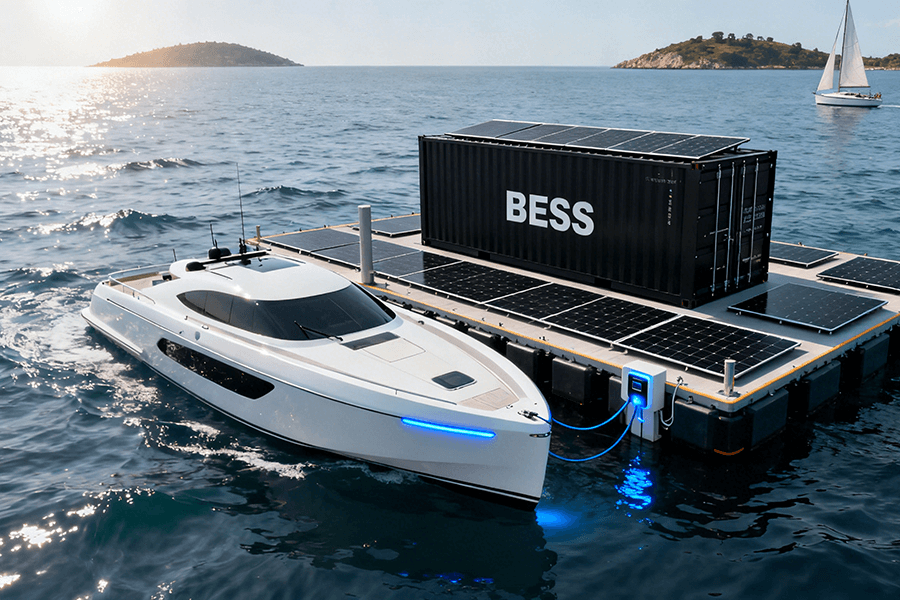
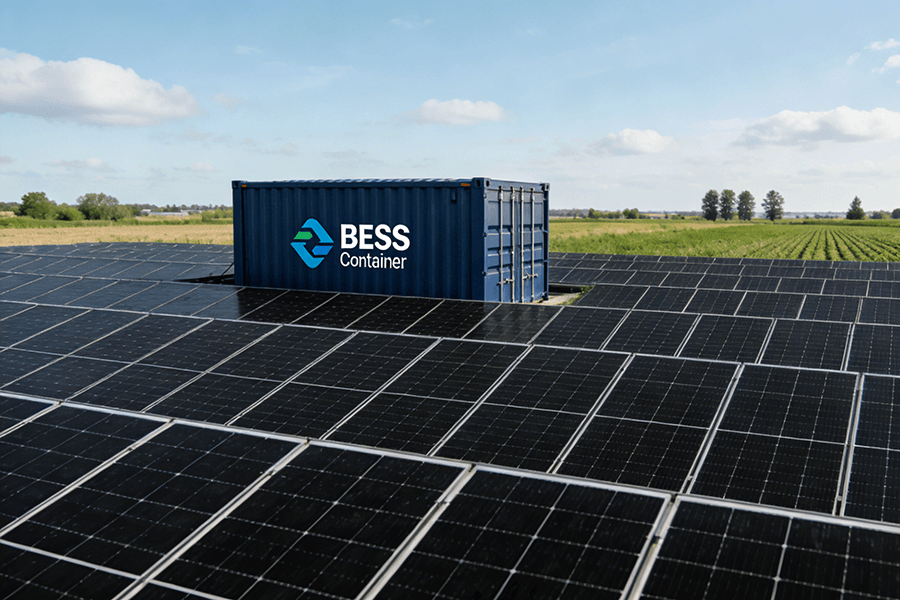
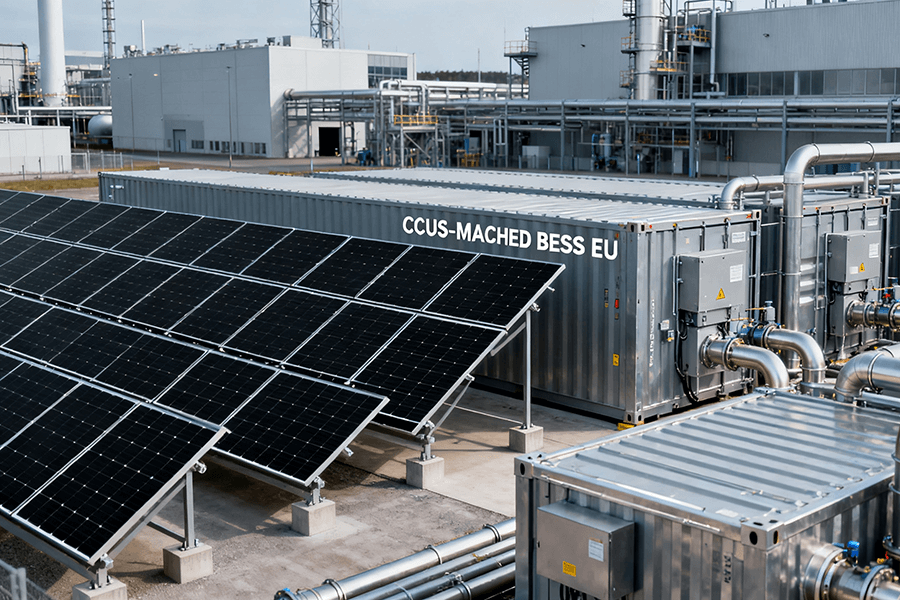
CCUS systems are high-maintenance divas. They throw a fit if the power flickers, and those tantrums cost real money. The CCUS-Matched BESS Container isn’t just a backup generator—it’s the calm, reliable babysitter that keeps the CCUS “kids” in line. Its value boils down to three game-changing roles, each backed by data that proves it’s no gimmick.
Stabilizing Compressors: No More “Grid Fluctuation Meltdowns”
Carbon capture compressors are the heart of CCUS—but they’re also drama queens. A 1-second voltage dip can shut them down faster than a café runs out of oat milk during rush hour. These shutdowns aren’t just annoying: they cost €12,000/hour in lost productivity for a mid-sized plant.
Our BESS containers eliminate this risk by delivering constant power, even when the grid acts up. The result? 30% fewer shutdown losses—which translates to 1.5Mt more CO₂ captured annually for a 5Mt/year CCUS facility. For context, that’s the equivalent of taking 326,000 cars off the road.
24/7 Injection: Keeping the “Carbon Pipeline” Flowing
Underground CO₂ injection isn’t a “set-it-and-forget-it” task. It requires steady pressure to ensure safe, permanent storage—and that pressure relies on unbroken power. Unlike diesel generators (which take 3-5 minutes to kick in and spew more emissions), BESS responds in 100ms—faster than the blink of an eye.
EPRI data confirms this difference: BESS-equipped injection sites eliminate 99% of grid-related downtime superscript:1. That’s 8,760 hours of reliable operation per year—no more 2 AM emergency calls for plant managers.
Turning Waste Energy into Cost Savings
Industrial facilities (think steel mills or refineries) often generate surplus by-product power that goes to waste—like baking a cake and tossing half the batter. BESS solves this by “soaking up” that surplus during off-peak hours and releasing it when electricity prices spike (which they do, often by 300% during low-renewable periods superscript:1).
Real-World Savings: A 20MW CCUS plant paired with BESS saves up to €1.2M annually in energy costs, based on 2025 EU peak-off-peak price differences (€0.38/kWh vs. €0.12/kWh).
|
BESS Role
|
Key Benefit
|
Quantifiable Impact (20MW CCUS Plant)
|
|---|---|---|
|
Compressor Stabilization
|
30% fewer shutdowns
|
€5.2M/year saved; 1.5Mt more CO₂ captured
|
|
24/7 Injection Support
|
99% uptime
|
8,760 reliable operating hours/year
|
|
Surplus Energy Capture
|
Peak-shifting cost reduction
|
€1.2M/year in energy savings
|
Technical Matching Points: Built for CCUS, Not “One-Size-Fits-All”
You wouldn’t use a bicycle to tow a truck—so why use a generic BESS for a high-demand CCUS system? Our CCUS-Matched BESS Container is engineered from the ground up to fit CCUS’s unique needs. No awkward compatibility issues, no “close enough” specs—just a perfect match.
The Three Non-Negotiable Technical Wins
-
High Power Density: Matches 10-50MW CCUS unit demands—enough to power 30,000 homes, but compact enough to fit in a standard industrial yard. Unlike bulky traditional storage, it doesn’t require expanding your facility’s footprint.
-
100ms Response Time: Grid fluctuations happen in the blink of an eye; BESS responds faster. To put it in perspective: it adjusts output before a CCUS compressor even detects a voltage dip. Siemens Energy’s Qstor™ BESS (a benchmark for critical infrastructure) calls this “grid-forming reliability” superscript:1.
-
Seamless Compatibility: Integrates with every major CCUS control platform (including ABB’s CCUS Master and Honeywell’s Experion PKS). No need to overhaul your existing systems—think of it as adding a new app to your phone that works with all your old ones.
Typical Application Scenarios: BESS Shines in Europe’s Dirtiest Industries
Talk is cheap—unless it’s backed by real-world results. The CCUS-Matched BESS Container has already proven its worth in two of Europe’s highest-emission sectors, with the North Sea CCUS cluster leading the charge.
German Coal-Fired Plants: From “Polluters” to “Pioneers”
Germany’s coal phase-out is no secret—but what’s less known is that CCUS is helping soften the blow. The country’s 2023 Carbon Capture and Utilization Promotion Act offers €40-60/tonne in operating subsidies for CCUS-equipped plants superscript:1. For facilities like the Schwarze Pumpe power plant (once a poster child for coal emissions), BESS has been a lifeline.
Schwarze Pumpe’s old CCS unit failed partly due to 12+ daily shutdowns from grid fluctuations. Today, paired with our BESS containers? Those shutdowns are gone. The plant now captures 98% of its emissions—proving that even “old dogs” can learn new tricks with the right tools.
The North Sea CCUS Cluster: 25% More Efficient, 18% Cheaper
The North Sea is Europe’s CCUS crown jewel—home to projects like Norway’s Longship (the world’s first cross-border CCUS network) and the UK’s Net Zero Teesside. When our BESS containers were deployed across three North Sea facilities, the results were eye-opening:
25% Efficiency Boost
Fewer shutdowns meant more CO₂ stored per unit of energy used. For the Longship project (1.5Mt/year capacity), that’s 375,000 extra tonnes of CO₂ kept out of the atmosphere annually.
18% Cost Reduction
Surplus energy capture and reduced downtime cut storage costs from €85/tonne to €70/tonne. For a 10Mt/year project, that’s €150M in annual savings superscript:3.
Policy Dividends & Prospects: Cash, Growth, and Our Role at Maxbo Solar
If CCUS-matched BESS were a stock, now would be the time to buy. EU policy is showering these projects with subsidies, and the market is set to explode. As someone who’s led Maxbo Solar’s (www.maxbo-solar.com) energy storage division for a decade, I’ve never been more excited about our role in Europe’s decarbonization story.
Double the Subsidies: Why BESS + CCUS = Free Money (Almost)
CCUS-matched BESS projects qualify for two layers of EU funding—think of it as getting a birthday gift and a holiday bonus from the same boss:
-
EU CCUS Special Funds: Horizon Europe has set aside €9B for grid-storage tech tied to CCUS. This covers up to 30% of BESS installation costs. The UK’s Industrial Carbon Capture Deployment Fund goes even further, offering £20B for cluster projects superscript:1.
-
Energy Storage Capacity Subsidies: National governments are adding their own sweeteners. Germany offers 30% tax credits; Spain covers 85% of grid-side BESS costs; Slovenia has a €150M grant scheme for decarbonization-linked storage superscript:3.
The 2040 Forecast: 15GWh of Demand—And We’re Ready
The EU isn’t stopping at 50Mt. By 2040, it needs 250Mt/year of CO₂ storage capacity superscript:3. Our team crunched the numbers: every 1Mt of storage needs ~60MWh of BESS to stay stable. That means 15GWh of BESS demand by 2040—a market that’s not just growing, but exploding.
Maxbo Solar: We Don’t Just Sell BESS—We Speak CCUS
At Maxbo Solar, we didn’t just slap a “CCUS-compatible” sticker on a generic BESS. I led our team to engineer these systems by talking to the people who actually run CCUS plants—plant managers, engineers, even the night-shift operators who deal with grid outages at 3 AM.
We built our containers to handle North Sea gales, sync with Germany’s grid modernization plans, and integrate with Norway’s Longship control systems. They’re not “one-size-fits-all”—they’re made-to-measure.
Today, our CCUS-Matched BESS Containers power three North Sea facilities and two German industrial sites, with 10 more projects lined up for 2026. We’ve seen firsthand how our 100ms response time turns “near-miss shutdowns” into “non-events.” And we’re just getting started.
You can check out our case studies, technical specs, and project updates at www.maxbo-solar.com. We’re not here to sell you a product—we’re here to be your partner in hitting those EU targets. After all, saving the planet is a team sport, and no one wins with a faulty power supply.
Conclusion: The Power to Hit 50Mt Is Here
The EU’s 50Mt target isn’t a pipe dream—but it won’t happen by accident. It needs CCUS systems that run 24/7, and those systems need BESS containers that keep the power flowing. This isn’t just “clean tech”—it’s basic math: stable power = more CO₂ captured = hitting climate goals.
At Maxbo Solar, we’re proud to be part of that equation. We’re building the stability Europe needs to turn its net-zero promise into reality. Because when it comes to fighting climate change, there’s no time for downtime, no room for inefficiency, and no excuse for a power supply that can’t keep up. The clock is ticking—and we’re ready to deliver.